

If you have ever watched a parent’s shoulders drop the moment their baby finally settles under their hands, you already understand why this work is so rewarding. Teaching baby massage is one of those rare careers that is flexible, deeply human, and genuinely needed in every community. Having trained instructors across the UK and beyond for more than two decades, the question we hear most often is a simple one: where do I actually start?
This guide walks you through the whole journey, from your first bit of research to a fully booked class list, in the order that actually works. No fluff and no jargon, just the practical steps, the real costs, and the lessons our instructors wish someone had told them on day one.
What a Certified Baby Massage Instructor Really Does
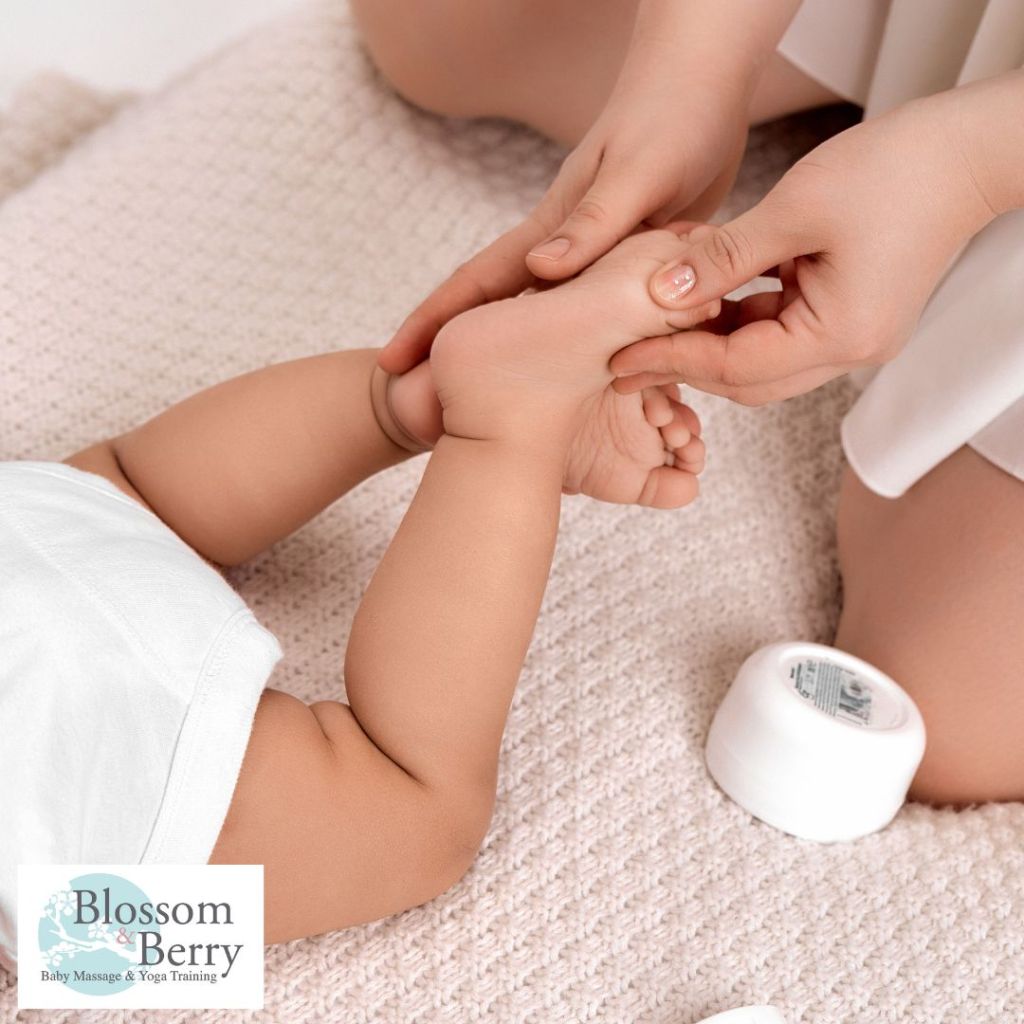
A certified baby massage instructor teaches parents and carers how to massage their own babies safely and confidently. An important point that surprises newcomers: you are not massaging the babies yourself. Your role is to guide, demonstrate, and reassure, usually in small group classes or gentle one-to-one sessions. The parent always keeps the hands-on connection with their child, and you give them the techniques and the confidence to use them at home.
Baby massage is far from a passing wellness trend. It has been practised for centuries across India, Africa, and much of Asia, where infant massage is woven into everyday family life and passed down through generations. In more recent decades it has grown into a recognised practice in the West that supports bonding, communication, and healthy early development. As a certified instructor, you become the bridge between that rich tradition and the modern parents sitting on the mats in front of you.
Why Baby Massage Matters (and Why Demand Keeps Growing)
Parents do not book classes because massage sounds nice. They come because it works, and there is a solid and growing body of research to back that up. Studies from the Touch Research Institute at the University of Miami, led by Dr Tiffany Field, have linked regular infant massage with better sleep, less crying, and lower levels of stress hormones in babies. The NHS also recognises the value of nurturing touch and skin contact for bonding and attachment in the early months.
Beyond the science, the changes parents notice in class are immediate: a calmer baby, an easier bedtime, relief from trapped wind and colic, and a real boost in their own confidence as new parents.
For instructors, all of this is good news. Demand for warm, knowledgeable, well-trained teachers is strong, and it is the kind of work you can build around your own life.
The Step-by-Step Path to Becoming Certified
Here is the route, broken into six clear steps. You can move faster or slower depending on your circumstances, but the sequence below is the one that consistently sets new instructors up to succeed.
Step 1. Get Clear on the Requirements and Skills
There is no single legal qualification needed to teach baby massage in the UK, which catches a lot of people off guard. What matters is that you train with a reputable, accredited provider, because that is what makes your certificate recognised and your insurance valid. Most quality programmes ask that you are at least 18 and comfortable working with parents and infants. Some also expect a current first aid certificate.
If you plan to teach in settings such as children’s centres or healthcare environments, you will usually need an enhanced DBS check, which is the UK background check for anyone working closely with children. Beyond the paperwork, the personal qualities you bring matter just as much as any certificate. The table below covers the traits that separate a good instructor from a forgettable one.
| Skill or quality | Why it matters in the class |
|---|---|
| Warmth and patience | New parents are often tired and anxious. A calm, unhurried presence puts them at ease. |
| Clear communication | You are translating technique into simple, repeatable steps parents can use at home. |
| Confidence with infants | Comfort handling demonstrations (often on a doll) reassures parents and keeps things safe. |
| Observation skills | Reading a baby’s cues and a parent’s body language lets you adapt on the spot. |
| Basic business sense | Most instructors are self-employed, so simple admin and marketing skills go a long way. |
Step 2. Choose the Right Certification Programme
This is the decision that shapes everything that follows, so it is worth slowing down. The big questions are accreditation, format, curriculum depth, and the support you receive after you qualify. A cheap course that leaves you unable to get insurance or unsure how to run a class is no bargain at all.
One of the first choices is whether to train in person or online. Both can be excellent when delivered well. The comparison below should help you weigh them against your own learning style and schedule.
| Factor | In-person training | Online or blended training |
|---|---|---|
| Hands-on practice | Immediate feedback from a trainer in the room | Practice at home with video review and live tutor support |
| Flexibility | Fixed dates and a set venue | Learn around work and family on your own schedule |
| Cost | Often higher once travel is added | Usually lower, with no travel costs |
| Networking | Strong: you meet peers face to face | Built through online groups and live sessions |
| Best for | People who learn by doing in a group | Self-motivated learners who want flexibility |
Whichever format you pick, check three things before you pay: that the course is accredited by a recognised body, that the curriculum covers infant development and safety as well as technique, and that insurance providers accept the qualification. Ask to see a sample of the course materials and find out exactly what support continues after you finish.
Step 3. Prepare Properly Before You Start
A little preparation makes training far less stressful. Map out a realistic study plan around your existing commitments rather than cramming, and treat it like any other appointment in your week. Gather your basics early: a weighted demonstration doll, a quality cold-pressed massage oil, comfortable mats, and a notebook for the techniques you want to remember.
Then practise, practise, practise. Rehearse the strokes on your doll until the sequence feels natural, and if you can, run through a mock class with a friend or a willing parent and baby. The goal is not perfection. It is building enough quiet confidence that, when you stand in front of real parents, your attention is on them rather than on remembering what comes next.
Step 4. Complete Your Training and Assessment
During the course itself, make the most of every guided session. This is where the theory becomes muscle memory. You will typically cover infant anatomy and development, the full massage routine and its modifications, safe use of oils, and how to actually teach the material to a group.
Once you have passed, you receive your certification. Keep a digital and printed copy, and note the accrediting body clearly, because you will reference it when you arrange insurance and when you reassure prospective clients that you are properly qualified.
Step 5. Set Up the Business Side
This is the step that, honestly, trips up the most talented instructors. Loving the teaching is not the same as running a business, and the good news is that the business basics are very learnable. Start by deciding how you will operate, usually as a sole trader in the UK, and register with HMRC. Sort your insurance next: you will need public liability cover, and your provider will ask for proof of your accredited qualification.
From there, build a simple plan. Decide on your prices (research what local classes charge, then price for the value you offer rather than racing to the bottom), choose where you will teach, and create a few clear ways for parents to find and book you. A tidy website, an active local social media presence, and a relationship with nearby midwives, health visitors, and parent groups will fill your classes faster than any paid advert. Above all, treat every parent with warmth and professionalism, because in this field word of mouth is everything.
Step 6. Keep Growing With CPD and Specialisation
Certification is the start of your journey, not the finish line. The instructors who thrive keep learning. Continuing professional development keeps your knowledge current and your classes fresh, and it signals real expertise to parents. Many instructors go on to specialise, perhaps in soothing colic and teething, or by adding complementary skills such as baby yoga. Carving out a niche makes you memorable and lets you stand out in a busy market.
Networking matters too. Connecting with other instructors, doulas, and early-years professionals leads to referrals, collaborations, and the kind of support that keeps you going through the quieter months. As you grow, you might add new class times, run workshops, build an online offering, or even train others to teach under your wing.
Case Study: From Maternity Leave to a Booked-Out Class List
The following is a representative example, drawn from the common journeys of instructors we have trained. Details have been combined to protect privacy, but the path and the results are typical.
Priya, a former HR manager from Leicester, first discovered baby massage as a new mum, when a weekly class became the calmest hour of her week. On maternity leave and reluctant to return to long office hours, she decided to retrain. She chose an accredited blended course so she could study during nap times, practised her routine on a demonstration doll most evenings, and qualified in just under three months.
Her first move after certifying was not advertising. It was connecting with other practitioners supporting parents and babies and simply introducing herself and offering a free taster session. Six months in, Priya was running two classes a week with some one to to one sessions too, almost entirely from referrals.
| Milestone | What happened |
|---|---|
| Month 1 to 3 | Completed accredited training, practised daily, arranged insurance and DBS. |
| Month 4 | Ran a free taster for a local parent group, which filled her first paid course. |
| Month 5 to 6 | Grew to two weekly classes with a waiting list, driven by word-of-mouth referrals. |
Priya’s story is not unusual, and it highlights the real lesson: the qualification opens the door, but relationships and consistency are what build the business.
How Much Does It Cost and How Long Does It Take?
Costs vary by provider and format, so treat the figures below as realistic UK ranges rather than fixed prices. Always confirm exactly what is included, especially ongoing support, materials, and accreditation.
| Item | Typical range | Notes |
|---|---|---|
| Accredited course | £900 to 1500 | Blended and online courses sit at the lower end; intensive in-person courses higher. |
| Time to qualify | 6 weeks to 4 months | Depends on whether you study full time or around other commitments. |
| Insurance (per year) | £60 to £150 | Public liability cover; required before you teach paying clients. |
| DBS check | £20 to £50 | Enhanced check, needed for certain settings working with children. |
| Starter materials | £50 to £150 | Demonstration doll, oils, mats, and basic class resources. |
Common Mistakes New Instructors Make
A few patterns come up again and again. Spotting them early will save you months.
- Choosing a course on price alone. A qualification that insurers do not accept costs far more in the long run.
- Underpricing out of nerves. Charging too little attracts the wrong clients and burns you out quickly.
- Waiting until you feel completely ready. Confidence is built by teaching, not before it. Start small and grow.
- Skipping the relationships. Health visitors, midwives, and parent groups are your warmest source of referrals.
- Forgetting CPD. The market moves, and parents trust instructors who keep learning.
Frequently Asked Questions
Do I need any qualifications before I can train as a baby massage instructor?
In most cases, no formal prior qualification is required. You usually need to be at least 18 and comfortable working with parents and babies. Some providers prefer a current first aid certificate, and certain settings will require an enhanced DBS check.
How long does it take to become a certified baby massage instructor?
Most people qualify in roughly six weeks to four months. The exact timeline depends on whether you study full time or fit your training around work and family, and on the format of the course you choose.
Can I become a certified baby massage instructor online?
Yes. Many reputable providers offer online or blended courses with live tutor support and video assessment. The key is to confirm the course is accredited and that insurers accept the qualification before you enrol.
How much can a baby massage instructor earn?
Earnings vary widely because most instructors are self-employed and set their own schedules. Income depends on your prices, how many classes you run, your location, and whether you add services such as workshops or one-to-one sessions.
Is baby massage instruction a good career for parents?
It is one of the most popular career changes for new parents, precisely because it is flexible and meaningful. You can build your classes around your own family and scale up or down as life allows.
What is the difference between an accredited and a non-accredited course?
An accredited course is recognised by an established awarding or membership body, which makes your certificate credible and your insurance straightforward. A non-accredited course may be cheaper but can leave you unable to get cover or trusted by clients.
Ready to Start Your Journey?
Becoming a certified baby massage instructor is a genuinely fulfilling path that blends practical skill, teaching, and compassion. With proper training and a little courage, you can build a meaningful career supporting families through one of the most precious stages of life. The first step is simply choosing the right course and committing to it.
If you are ready to explore your options, take a look at our accredited training courses or, if you are not sure where to begin, our short quiz can point you to the right next step.