The Roots
OF THE PRACTICE
The Story of Baby Massage Around the World
From ancient India to today's Blossom & Berry classes, the gentle practice of baby massage has global roots.
Touch is the oldest parenting language and is our mammalian instinct to nurture, soothe, and co regulate through nurturing touch.
HONOURING THE LINEAGE
Baby massage is not a Western invention. It is one of the oldest parenting practices in human history, found in nearly every culture that has ever welcomed a new baby.
Across continents and centuries, the laying of hands on a newborn has rarely been a "technique" in the way we now use that word. It has been an act of welcome, of protection, of bonding. Some traditions have named it. Many have not needed to. Touch needs no translation.
What follows is a brief, honest overview of the traditions most often cited when we talk about the global story of infant massage. It is not exhaustive. I have lived and learned within some of these traditions; I have only read about others. Where I have read, I have tried to read carefully.
INDIAN BABY MASSAGE AND YOGA
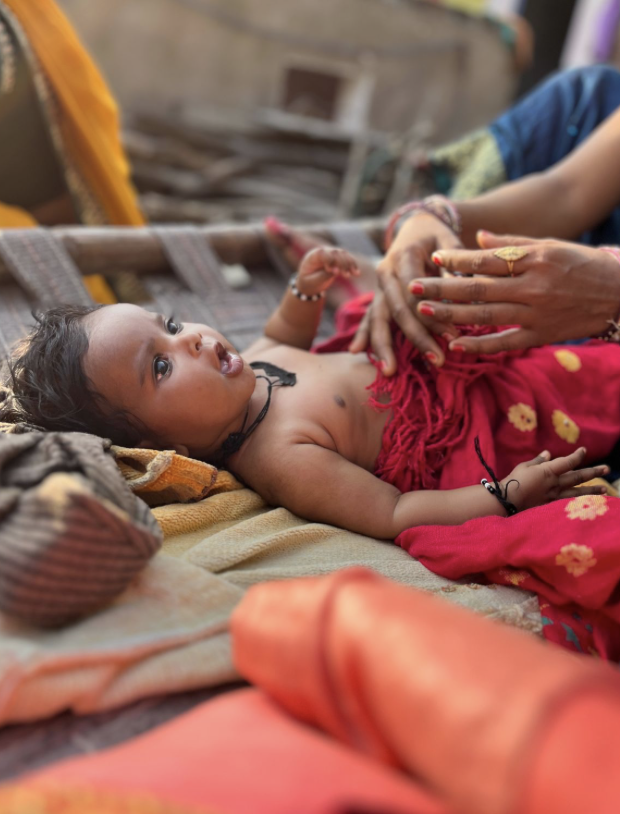
In India, the practice of massaging newborn babies is ancient and living. It appears in Ayurvedic texts under names like Balabhyanga. Research published by the National Institutes of Health (NIH) confirms that the vast majority of Indian families massage their babies daily from the earliest weeks of life, and that the practice is widely understood as a heritage tradition passed from older women to new mothers.
The roots of infant massage in Ayurveda run deep. They are tied to ideas of warmth, strength, bone development, digestion, sleep, and the weaving of a baby into the wider family. In many Indian homes, baby massage is not a single event — it is part of a daily rhythm that includes oil, bath, song, and prayer.
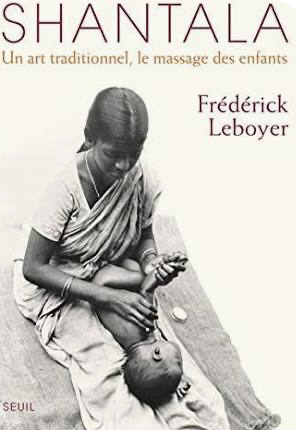
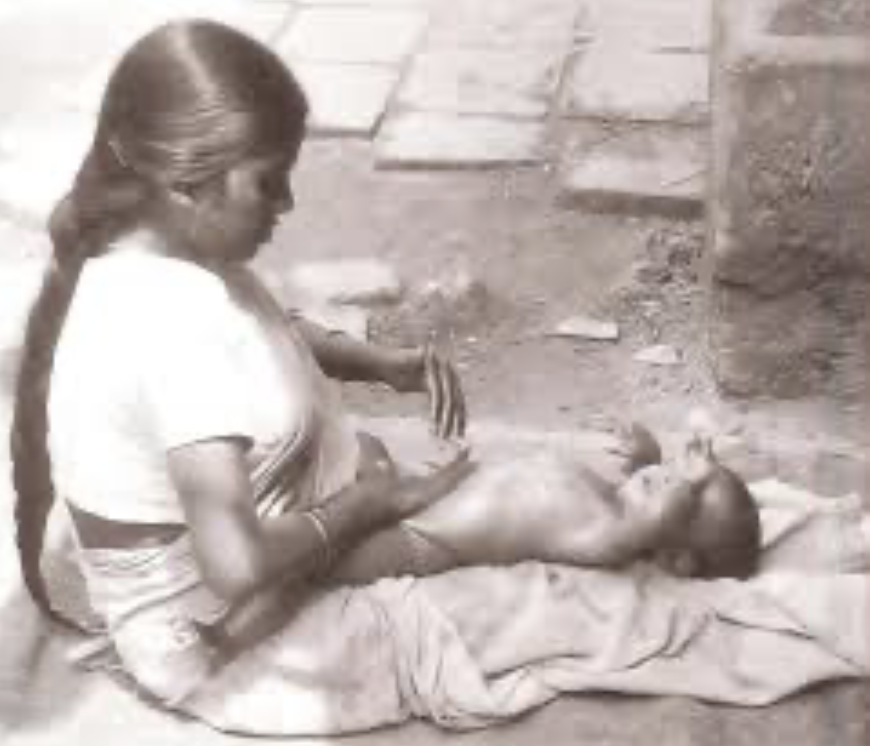
In 1976, the French obstetrician Dr Frédérick Leboyer published Shantala: Un art traditionnel — le massage des enfants, a quiet, beautiful book of black-and-white photographs of a young Indian mother in Calcutta massaging her baby. Leboyer had spent time in India and had witnessed the practice. His book gave Indian baby something the West didn't yet have: a name for it, and the dignity of an audience. He named the practice Shantala — a name he took from the mother in his photographs. He did not invent the practice. He made it visible.
A few years later, in 1982, Leboyer also filmed Shantala as a documentary. The book and the film opened a door. Through it walked a generation of Western mothers, midwives, and birth educators who would later become infant massage teachers — including me.
I am grateful to Leboyer for opening that door. I am also aware that he named what he witnessed as belonging to the people whose hands he was photographing. The original teachers of Shantala are the Indian mothers. I try to honour that, and in my recent times living in India honour it more and more as I witness it.
Baby Yoga
What "yoga" actually means
Yoga is one of the great inheritances of India. At its deepest, it is a centuries-old embodied philosophy with its own lineages, texts, and teachers — asana, pranayama, bandha, mantra, dhyana. In India, the word carries a weight it does not yet carry in the West.
So what does "baby yoga" mean in the West?
The phrase baby yoga is a Western category, and its origin matters. It was popularised by Dr Françoise Barbira Freedman, a medical anthropologist at the University of Cambridge, who founded Birthlight — a UK registered charity that trains thousands of perinatal and baby yoga teachers worldwide. Dr Freedman wrote the original Baby Yoga book in 2000 and is widely recognised as the pioneer of the category. Birthlight's Perinatal Yoga training was developed out of the Diploma of Yoga Therapy offered in London by the Yoga Biomedical Trust.
In Birthlight's lineage, and in mine, baby yoga is not classical yoga practised on babies. Babies do not hold asana, do not practise pranayama, do not meditate on mantra. What sits under the phrase is:
Baby-led developmental movement — gentle, supported stretching, cycling, rolling, sensory play.
Touch practices that overlap with baby massage — stroking, holding, attuned contact.
Rhythm and cuddle practices — rocking, humming, gentle vocalisation, lap bouncing, soothing motion.
A mother's practice layer — postnatal movement, breath, and pelvic-floor reconnection.
Why we still call it "baby yoga"
Birthlight created the name. It is the name I was trained under. Replacing the term would obscure the lineage of my training, much as the name Shantala — given to Indian baby massage by Leboyer in 1976 — is now a Western landmark even though the practice itself has been carried by Indian families for centuries.
And at the bottom of the Birthlight house, classically grounded yoga genuinely sits there. Birthlight's teacher training draws on real yoga lineage. Françoise Freedman is a Senior Yoga Teacher. The parent-practice layer of our baby yoga is adapted from that tradition. Baby yoga is adapted for mums and very young children.
There are things we deliberately do not do, because they would be dishonest with the word yoga:
We do not claim to teach classical yoga to babies. They are not doing classical yoga, and I won't pretend they are.
We do not use the Sanskrit terminology of the classical tradition (asana, pranayama, mantra, bandha, chakra) to describe the baby practices — those words have specific classical meaning in the Indian tradition, and using them loosely would misrepresent what's offered.

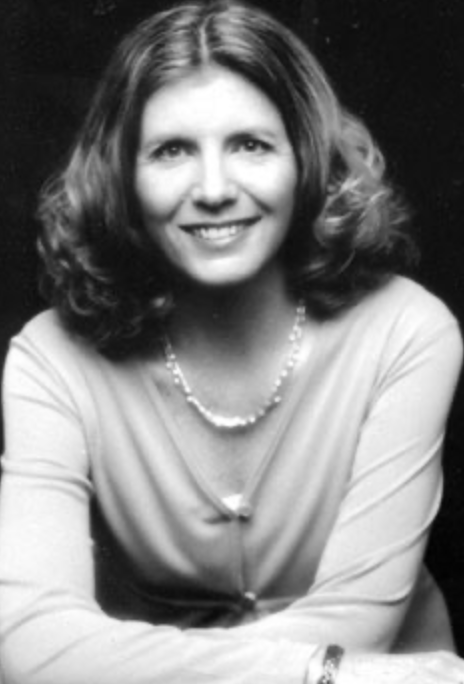
VIMALA MCCLURE
If Dr Leboyer is the person who made Indian baby massage visible to the West, Vimala McClure is the person who built the modern Western infrastructure for its teaching.
Vimala's story matters. I want to tell it properly.
In the early 1970s, Vimala travelled to India as a young woman and worked in an orphanage there. Day after day, she watched the orphanage staff massage the babies in their care with gentle hands and warm oils. She learned the strokes. She learned that for these babies, touch was not a luxury but a lifeline.
When Vimala returned to the United States, she carried those strokes with her. In 1978 she created a written training programme for childbirth educators. In 1986, she founded the International Association of Infant Massage (IAIM) — the global organisation that continues to carry infant massage teaching forward today. IAIM's international office moved to Sweden in 1992, and the organisation has since grown to include trained instructors in over seventy countries.
But Vimala did not only teach strokes. She taught a way of relating to a baby — with consent, with attention, with the baby's cues at the centre. Cue-based, baby-led, consent-led — these phrases come directly from her teaching. They are the foundation on which everything I teach at Blossom & Berry sits.
Vimala founded IAIM. She is the reason the certified infant massage profession exists in the form it does today. I do not say that lightly. I say it so you know who came before me. You can click the image to see our podcast

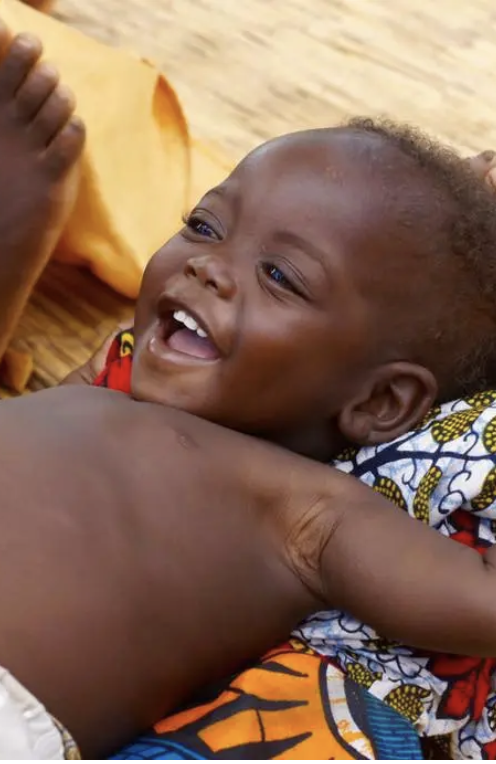
Touch is a global language expressed in many ways all centered in nurturing care.


Africa, the Pacific and beyond
The story of infant massage does not begin and end in India. Touch is a global language.
In West Africa and across much of the African continent, traditional newborn oil massage — using plant oils blended in family and community kitchens — has been documented as a long-standing postnatal practice, often connected to themes of protection, kinship, and welcoming the baby into the family. Ethnographers and public-health researchers, including work published in International Health, continue to document the depth and reach of these traditions.
In the Pacific — including Aotearoa New Zealand, Tonga, Samoa, the Cook Islands, and Niue — traditional infant-care practices include carrying, rubbing, and gentle touch. Comparative cross-cultural research has examined how Māori and Pacific caregivers incorporate touch and massage into the everyday care of babies, alongside other practices.
Beyond these, there are strong infant-care traditions using touch and massage in China (including within traditional Chinese medicine, with historical references during the Qing dynasty), in Southeast Asia, in Indigenous communities across the Americas, in the Caribbean, and throughout the diaspora. I will not pretend to be an expert in any of these. What I will say is that every one of them is part of the wider story of how human beings have always known to lay their hands on their babies.
My own lineage
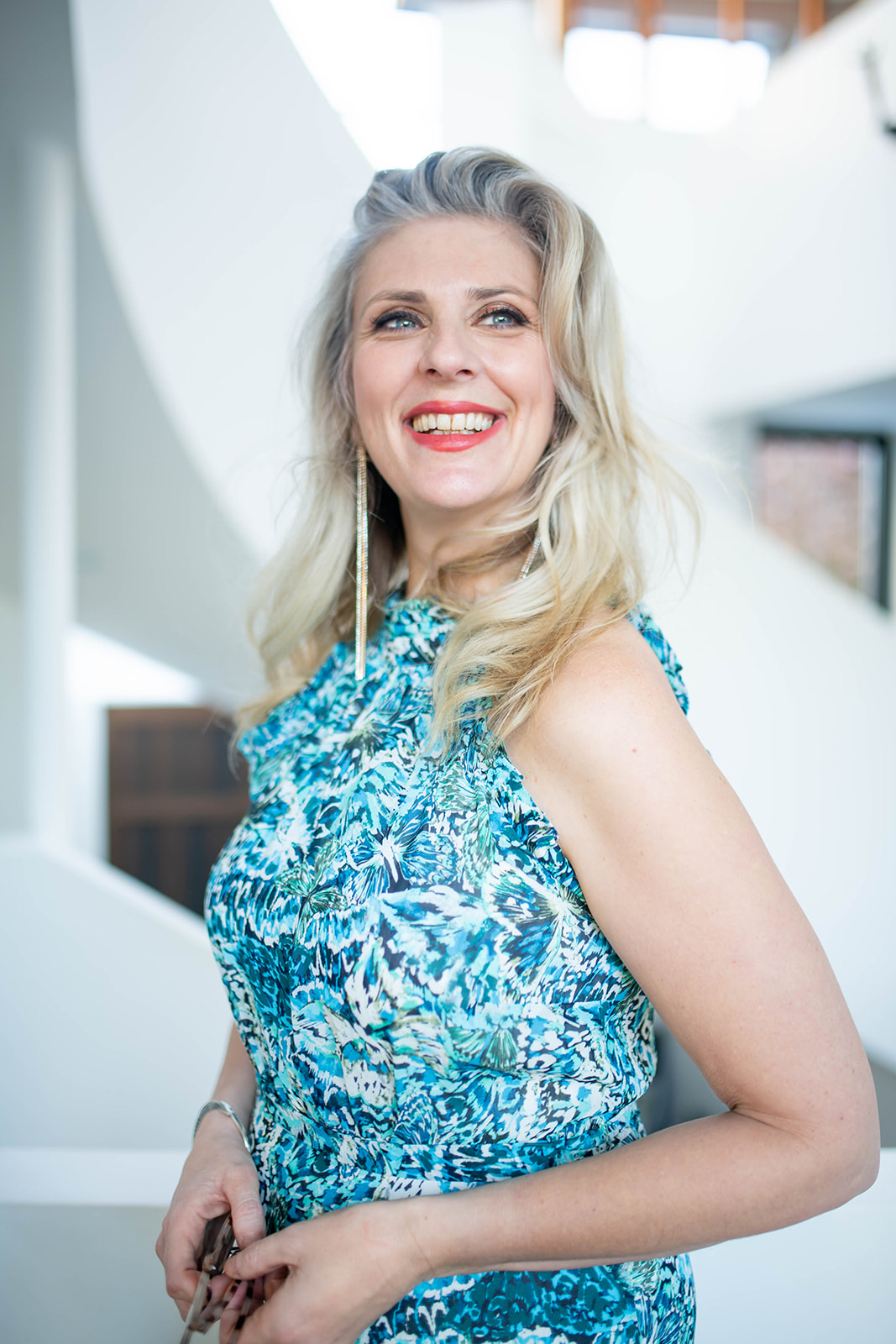
I come to this practice honestly, and I want to be straightforward about where Blossom & Berry fits.
I trained with the International Association of Infant Massage (IAIM) over twenty years ago. IAIM was where I first encountered infant massage properly. Vimala McClure's framework — cue-based, baby-led, consent-led — is the foundation on which everything I teach sits.
From that IAIM foundation, I built further. I trained in baby yoga with Birthlight, in early childhood development, in nurturing care, in infant mental health, in pregnancy massage, in clinical hypnotherapy, in life coaching and many other modalities from postnatal yoga to doulaship and sleep consultancy. I worked with Bhavesh Joshi, a leading UK osteopath and lectured at The London School Of Massage developing a baby massage routine and course based on both physical and emotional development. I wrote a book — Baby Massage: Expert know-how at your fingertips — which has been read by families all over the world.
What I created at Blossom & Berry is, in part, my own synthesis. But the bones of it are not mine. They are IAIM's, founded by Vimala, rooted in India, taught to her in an orphanage many years before I was born.
I want to be honest about what Blossom & Berry is and is not:
- Blossom & Berry did not invent baby massage. The practice predates every one of us.
- Blossom & Berry's method exists within a lineage. IAIM → my teacher training in the early 2000s → my further training → our International Instructor Certificates today.
- Our method is not identical to traditional Indian baby massage. The strokes taught in our classes are a fusion of Indian massage observed by Vimala McClure and elements of Swedish massage and reflexology. Our focus is cue-based, baby-led, and consent-led.
- We are not the same as what a grandmother in Kerala, or a birth-attendant in Benin, or a Māori auntie in Auckland does. We have learned from these traditions. We do not claim to replace them.
What "honouring the roots" means to me
Honouring the roots does not mean overtly including Indian practices. It does not mean rebranding as somehow Indian or African because the strokes came from there.
Honouring the roots, to me, means six simple things:
-
Naming. Saying who came before us. Vimala McClure, IAIM, Leboyer, India, Ayurveda. Saying West Africa, the Pacific, China, Indigenous Americas.
-
Crediting. Listing IAIM among my qualifications. Listing Vimala McClure among my teachers. Asking my students to study with IAIM and to read Vimala's books.
-
Translating carefully. Bringing the practice to Western parents and teachers without flattening it — without stripping it of its meaning.
-
Reserving judgement. Traditional Indian baby massage is not identical to what we teach. There are real differences around firmness, oils on newborns, and who performs the massage. We are entitled to teach differently. We are not entitled to lecture other cultures about how to do it.
-
Continuing to learn. I read. I ask. I listen to practitioners from cultures I did not grow up in. I book guests on our podcast who know more than I do.
-
Passing it on with humility. Every Blossom & Berry teacher I certify inherits this lineage. They inherit its responsibility too. I tell them the story of Vimala in their training. I ask them to pass it on.
We are open to discussion on everything on this page and are open to correction.
History Overview
AN OVERVIEW OF THE ROOTS
- 5000+ years — Ayurvedic infant massage is referenced in classical Indian medical literature, under names including Balabhyanga.
- Early 1970s — Vimala McClure travels to India, works in an orphanage, learns traditional infant massage.
- 1976 — Dr Frédérick Leboyer publishes Shantala: Un art traditionnel — le massage des enfants.
- 1978 — Vimala creates her first written infant-massage training programme for childbirth educators.
- 1982 — Leboyer's film Shantala is released.
- 1986 — Vimala McClure founds the International Association of Infant Massage (IAIM) in the United States.
- 1992 — IAIM's international office is established in Sweden.
- 2001 — I (Gayle Berry) introduce baby massage into my own family life, training with IAIM shortly after.
- 2002 — Blossom & Berry is founded in the UK. I worked with Bhavesh Joshi, a leading UK osteopath and lectured at The London School Of Massage developing a baby massage routine and course based on both physical and emotional development.
- Today — Thousands trained through Blossom & Berry.
LIMITS OF THIS OVERVIEW
A page like this can never be complete. Baby massage traditions exist in places I have not named, in languages I cannot read, in families I will never meet. I have not tried to write a definitive history. I have tried to write an honest one.
I have also, deliberately, not over-claimed. I have not said, for example, that the specific name "Shantala" was a fixed Indian tradition's name before Leboyer popularised it; the practice certainly existed for centuries, but the name as a Western landmark is Leboyer's. On West African, Pacific and Indigenous traditions, I have written at the level of documented public-health literature, not at the level I would write as an insider. If you have family, community, or scholarly knowledge of any tradition I have touched on lightly here, I would be honoured to hear from you and add your voice beside mine.