How to Become a Baby Yoga Instructor: Step-by-Step Guide
There is a particular giggle a baby gives during a well-pitched yoga class, somewhere between surprise and pure delight, and once you have heard a whole room of it you understand the appeal of this work immediately. That was my experience when I decided to become a baby massage and yoga teacher over 23 years ago. Teaching baby yoga is joyful, flexible, and so beneficial for the families who walk through your door. Having trained instructors in baby yoga and baby massage for more than twenty years, the question I am asked most is always the same: how do I actually become one?
This guide takes you through the entire journey, from your first piece of research to a thriving, fully booked timetable, in the order that really works. No fluff and no jargon, just the practical steps, the honest costs, and the things our instructors wish they had known on day one. I love to empower people to work with parents and babies as that is where I believe we can make a real difference in the world.
What a Baby Yoga Instructor Really Does
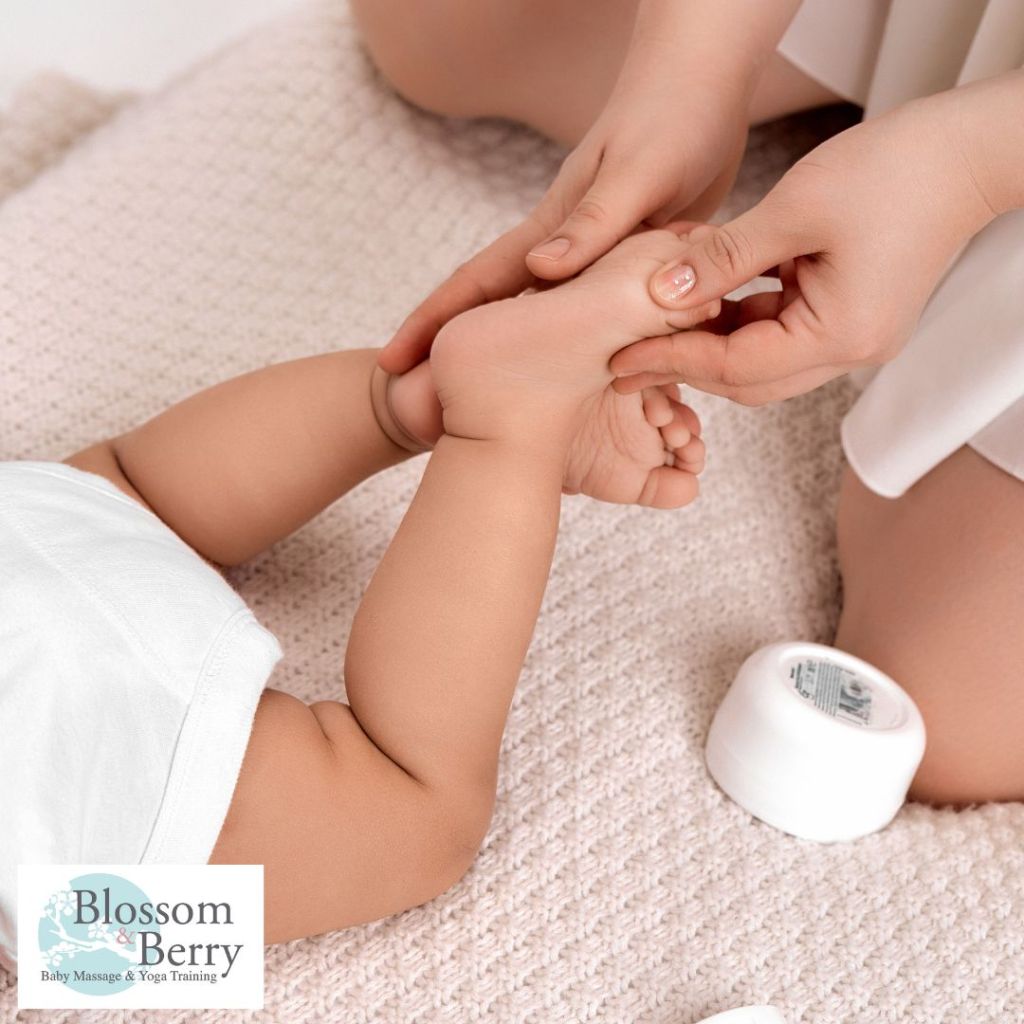
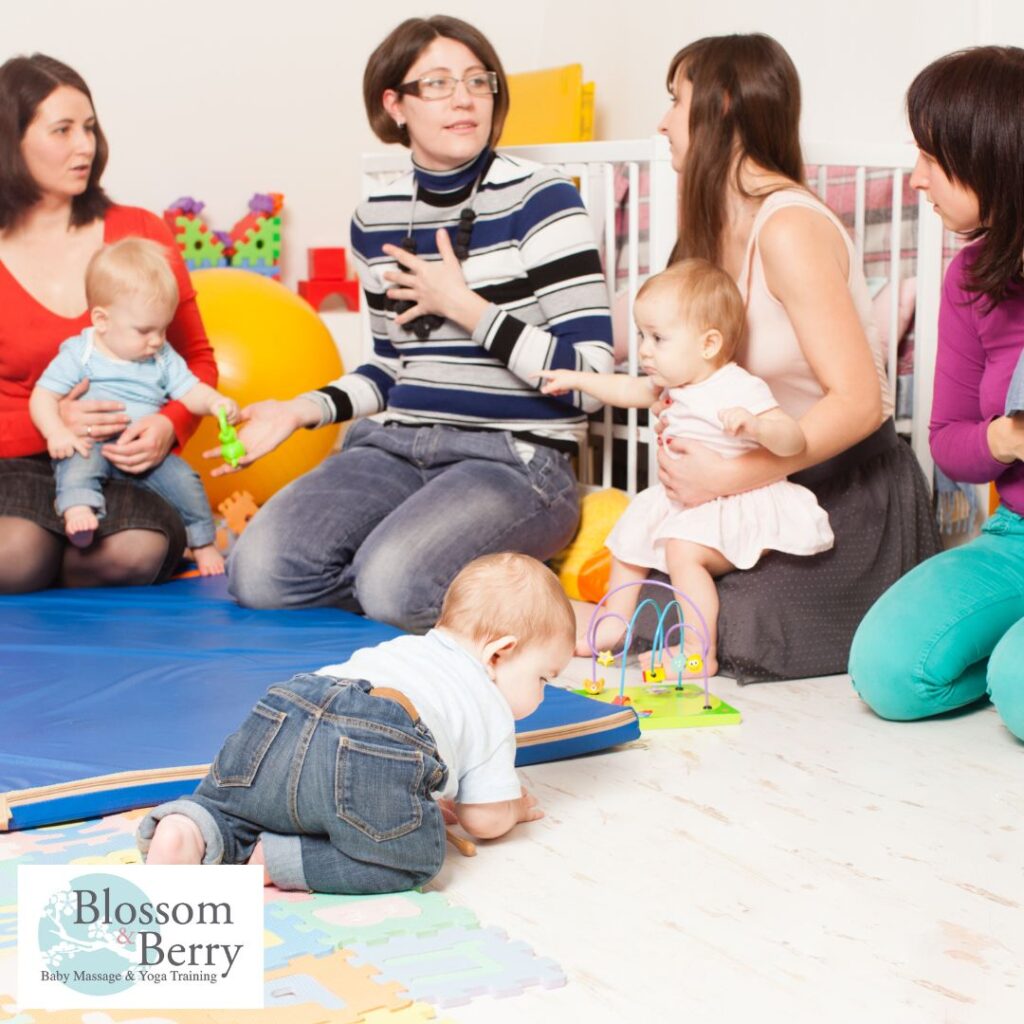
A baby yoga instructor guides parents and carers through gentle, age-appropriate movements, stretches, and rhymes that they do with their own babies. As with baby massage, an important point catches newcomers off guard: you are not handling other people’s babies for them. You lead, you demonstrate (usually with a weighted doll), you sing, and you reassure, while each parent moves alongside their own child. A typical class weaves together soft assisted stretches, gentle balance and swinging holds, tummy-time play, and a calming wind-down, all carried along by songs and rhymes that babies adore and parents pick up surprisingly fast.
Yoga itself is an ancient practice with thousands of years of heritage in India. Baby yoga is a modern and carefully adapted offshoot, shaped over recent decades by pioneers such as Birthlight in the UK, who translated yoga’s principles of gentle movement and breath into something safe and developmentally sound for infants. As an instructor, you carry that lineage into your local hall or studio and give today’s parents a structured, nurturing way to play, move, and bond.
Why Baby Yoga Matters (and Why Demand Keeps Growing)
Parents return week after week because baby yoga delivers. The gentle movements can ease trapped wind and support healthy digestion, the active floor play encourages gross motor development and body awareness, and the rhythm of a good class often helps with settling and sleep. Just as importantly, it builds the parent’s confidence and deepens the bond between them and their baby.
The NHS encourages active, floor-based play and tummy time from birth, and a well-run baby yoga class is a lovely, structured way to deliver exactly that. For aspiring instructors, this all adds up to strong, steady demand for warm and well-trained teachers, and the kind of work you can genuinely build around your own family life.
The Step-by-Step Path to Becoming a Baby Yoga Instructor
Here is the route, broken into six clear steps. Your pace can flex around your own circumstances, but this sequence is the one that consistently sets new instructors up to succeed.
Step 1. Get Clear on the Requirements and Skills
Here is something that surprises almost everyone: you do not need to be a qualified yoga teacher to teach baby yoga, and there is no single legal qualification required in the UK. What matters is training with a reputable, accredited provider, because that is what makes your certificate recognised and your insurance valid. Most quality programmes simply ask that you are at least 18 and comfortable working with parents and babies, and many prefer that you hold a current first aid certificate.
If you intend to teach in settings such as children’s centres or clinics, you will usually need an enhanced DBS check, the UK background check for anyone working closely with children. Beyond the paperwork, the personal qualities you bring will shape your classes more than any certificate. The table below covers the traits that make a baby yoga instructor memorable.
| Skill or quality | Why it matters in the class |
|---|---|
| Warmth and patience | Tired, anxious new parents relax around a calm, unhurried presence. |
| Willingness to sing and play | Songs and rhymes carry a baby yoga class; enthusiasm matters more than a perfect voice. |
| Safe, confident handling | Comfort demonstrating holds and movements (often on a doll) keeps everyone safe and reassured. |
| Observation skills | Reading a baby’s cues tells you when to continue a movement and, just as crucially, when to stop. |
| Clear communication | You are turning gentle technique into simple, repeatable steps parents can use at home. |
| Basic business sense | Most instructors are self-employed, so light-touch admin and marketing skills pay off quickly. |
Step 2. Choose the Right Certification Programme
This is the decision that shapes everything else, so take your time. Weigh up accreditation, format, the depth of the curriculum, and the support you receive after you qualify. A bargain course that leaves you uninsurable or unsure how to run a session is no bargain at all. One practical tip: many instructors choose to train in both baby yoga and baby massage, because parents often want both and a combined skill set fills your timetable faster.
An early choice is whether to learn in person or online. Both can be excellent when delivered well. The comparison below should help you match a format to your learning style and schedule.
| Factor | In-person training | Online or blended training |
|---|---|---|
| Hands-on practice | Immediate, in-the-room feedback on holds and movements | Practise at home with video review and live tutor support |
| Flexibility | Fixed dates and a set venue | Learn around work and family on your own schedule |
| Cost | Often higher once travel is added | Usually lower, with no travel costs |
| Networking | Strong: you meet peers face to face | Built through online communities and live calls |
| Best for | People who learn by doing in a group | Self-motivated learners who value flexibility |
Whichever you choose, check three things before you pay: that the course is accredited by a recognised body, that the curriculum covers infant development, anatomy, and safety as thoroughly as it covers movement, and that insurers accept the qualification.
Step 3. Complete Your Training and Assessment
In the training itself, make the most of every guided session, because this is where theory becomes second nature. You will typically cover infant anatomy and development, safe holds, swings and stretches, the all-important contraindications, how to use songs to structure a class, and how to teach the material to a group. Assessment usually blends a practical demonstration with some written or video work, depending on your provider.
A note on safety: good baby yoga always follows the baby’s cues. You never force a stretch, you support the head and neck, you leave time after feeds, and you take extra care with babies who have hip concerns, reflux, or any medical condition. A reputable course will teach you exactly where the limits are. Once you pass, keep digital and printed copies of your certificate and note the accrediting body clearly, since you will reference it for insurance and for reassuring prospective clients.
Step 5. Set Up the Business Side
This is the step that quietly trips up many naturally gifted instructors. Loving the teaching is not the same as running a business, and the reassuring news is that the business basics are very learnable. Decide how you will operate, usually as a sole trader in the UK, and register with HMRC. Sort your insurance next: you will need public liability cover, and your provider will ask for proof of your accredited qualification.
From there, keep it simple. Research what local classes charge, then price for the value you offer rather than racing to the bottom. Choose welcoming venues with warm, clean floor space, and give parents a few easy ways to find and book you. A tidy website, an active local social media presence, and friendly relationships with nearby midwives, health visitors, and parent groups will fill your classes faster than any paid advert. Treat every family with warmth and professionalism, because in this world word of mouth is everything.
Step 6. Keep Growing With CPD and Specialisation
Certification is the beginning of your journey, not the end. The instructors who thrive keep learning. Continuing professional development keeps your classes fresh and signals real expertise to parents. Many instructors broaden their offering over time, perhaps adding baby massage, moving into toddler yoga as their littlest clients grow, or weaving in postnatal yoga and relaxation for the parents themselves. Finding a niche makes you memorable in a busy market.
Networking matters just as much. Connecting with other instructors, doulas, and early-years professionals brings referrals, collaborations, and the kind of support that carries you through the quieter months. As you grow, you might add class times, host workshops, build an online offering, or train others to teach under your banner.
Case Study: From the Classroom to a Thriving Baby Yoga Timetable
The following is a representative example, drawn from the common journeys of instructors we have trained. Details have been combined to protect privacy, but the path and the results are typical.
Sofia, a former primary school teaching assistant from Bristol, had never set foot on a yoga mat before becoming a mum. What hooked her was a local baby yoga class: the songs, the structure, and the way her usually fractious son melted into the wind-down every week. Worried she was not “a yoga person,” she was relieved to learn that no prior yoga qualification was needed. She chose an accredited blended course, practised her sequences and rhymes during nap times, and qualified in just under three months.
Her first move was not advertising. It was a friendly coffee with the leader of a nearby parent group, offering a free taster session. That single taster filled her first paid course. She kept her prices fair but not rock-bottom, sent a warm follow-up message to every family, and gently encouraged happy parents to bring a friend. Six months in, Sofia was running two classes a weekt, almost entirely on the strength of referrals.
| Milestone | What happened |
|---|---|
| Month 1 to 3 | Completed accredited training (no yoga background needed), practised daily, arranged insurance and DBS. |
| Month 4 | Ran a free taster for a local parent group, which filled her first paid course. |
| Month 5 to 6 | Grew to two weekly classes, driven by word-of-mouth referrals. |
Sofia’s story makes the real lesson clear: you do not need to be a seasoned yogi to start, and while the qualification opens the door, it is relationships and consistency that build the business.
How Much Does It Cost and How Long Does It Take?
Costs vary by provider and format, so treat the figures below as realistic UK ranges rather than fixed prices. Always confirm exactly what is included, especially ongoing support, materials, and accreditation.
| Item | Typical range | Notes |
|---|---|---|
| Accredited course | £900 to £1500 | Blended and online courses sit at the lower end; intensive in-person courses higher. |
| Time to qualify | 6 weeks to 4 months | Depends on whether you study full time or around other commitments. |
| Insurance (per year) | £60 to £150 | Public liability cover; required before you teach paying clients. |
| DBS check | £20 to £50 | Enhanced check, needed for certain settings working with children. |
| Starter materials | £50 to £150 | Demonstration doll, mat, simple props, and basic class resources. |
Common Mistakes New Instructors Make
A handful of patterns come up again and again. Spotting them early will save you months.
- Choosing a course on price alone. A qualification insurers will not accept costs far more in the long run.
- Glossing over contraindications. Knowing exactly when not to do a movement is what keeps babies safe and parents trusting.
- Underpricing out of nerves. Charging too little attracts the wrong clients and leads to burnout.
- Waiting until you feel completely ready. Confidence is built by teaching, not before it. Start small and grow.
- Skipping the relationships. Health visitors, midwives, and parent groups are your warmest source of referrals.
Frequently Asked Questions
Do I need to be a qualified yoga teacher to teach baby yoga?
No. This is the biggest myth about the role. You do not need an adult yoga qualification or even a yoga background. A good accredited baby yoga course teaches you the safe movements, the songs, and the teaching skills from the ground up.
What age can babies start baby yoga?
Most classes welcome babies from around six to eight weeks, once the parent has had their postnatal check, although some gentle work can begin earlier. Classes are usually grouped by stage, from non-mobile babies up to confident crawlers, so movements stay age-appropriate.
Can I train to become a baby yoga instructor online?
Yes. Many reputable providers offer online or blended courses with live tutor support and video assessment. Before you enrol, confirm the course is accredited and that insurers accept the qualification.
How much can a baby yoga instructor earn?
Earnings vary widely because most instructors are self-employed and set their own schedules. Your income depends on your prices, how many classes you run, your location, and whether you add services such as workshops, combined baby massage, or one-to-one sessions.
Is baby yoga safe for babies?
Yes, when it is taught properly. Safe baby yoga always follows the baby’s cues, never forces a stretch, supports the head and neck, and respects clear contraindications. This is exactly why training with an accredited provider matters so much.
What is the difference between baby yoga and baby massage?
Baby massage focuses on nurturing strokes and touch, while baby yoga centres on gentle movement, stretches, and playful rhymes. They complement each other beautifully, and many instructors train in both so they can offer parents a fuller experience.
Ready to Start Your Journey?
Becoming a baby yoga instructor is a genuinely fulfilling path that brings together movement, play, teaching, and connection. With the right training and a little courage, you can build a flexible, meaningful career supporting families through one of the most precious stages of life. The first step is simply choosing a good course and committing to it.
If you are ready to explore your options, take a look at our accredited baby yoga training, or, if you are not sure where to begin, our short quiz can point you to the right next step.