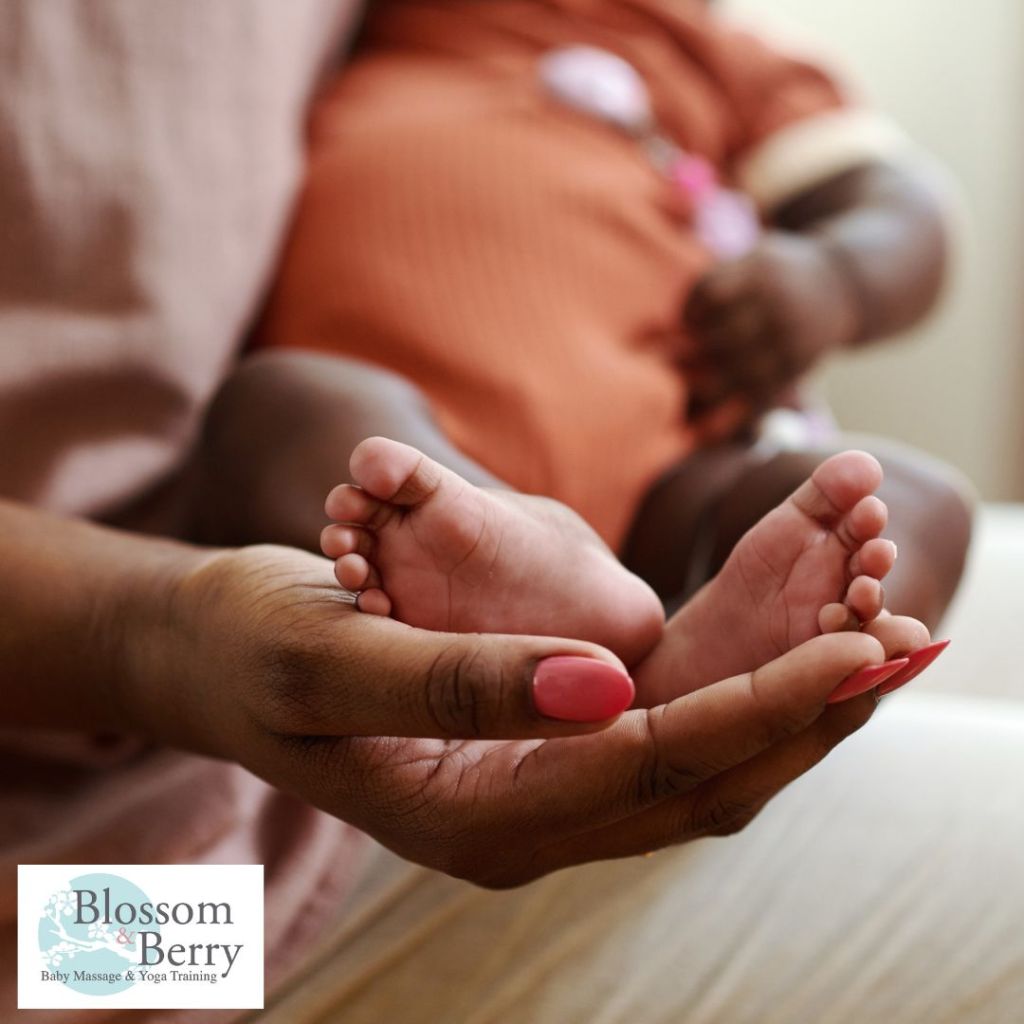


I’ve spent 23 years watching something remarkable happen in the space between a parent’s hands and a baby’s skin. Not once. Not occasionally. Thousands of times, across continents, across cultures, across every demographic variable you can imagine.
It’s not magic. It’s not mystical. It’s measurable, repeatable, and grounded in decades of peer-reviewed research that most parenting advice conveniently ignores.
When you learn to massage your baby with intention and structure, you’re not just soothing them. You’re actively constructing the neurobiological architecture for secure attachment—the single most reliable predictor of lifelong emotional regulation, relationship capacity, and psychological resilience.
Let me show you what the research actually says, why the mechanisms matter, and how this ancient practice translates into modern developmental science.
It’s not magic. It’s not mystical. It’s measurable.
Touch Isn’t Optional. It’s Infrastructure.
Your baby’s skin is their largest sensory organ, containing approximately 5 million touch receptors. Touch is the first sensory system to develop in utero—functional by 8 weeks gestation—and it represents the primary communication channel between caregiver and infant long before vision, language, or symbolic thought come online.
Before your baby can see your face clearly (visual acuity doesn’t mature until around 6 months), before they understand your words (language comprehension develops gradually across the first two years), before they can reach for you with intention (motor planning emerges around 4-6 months)—they can feel you.
This isn’t poetic language. It’s developmental fact, confirmed by decades of research in neurodevelopment, attachment theory, and infant psychology.
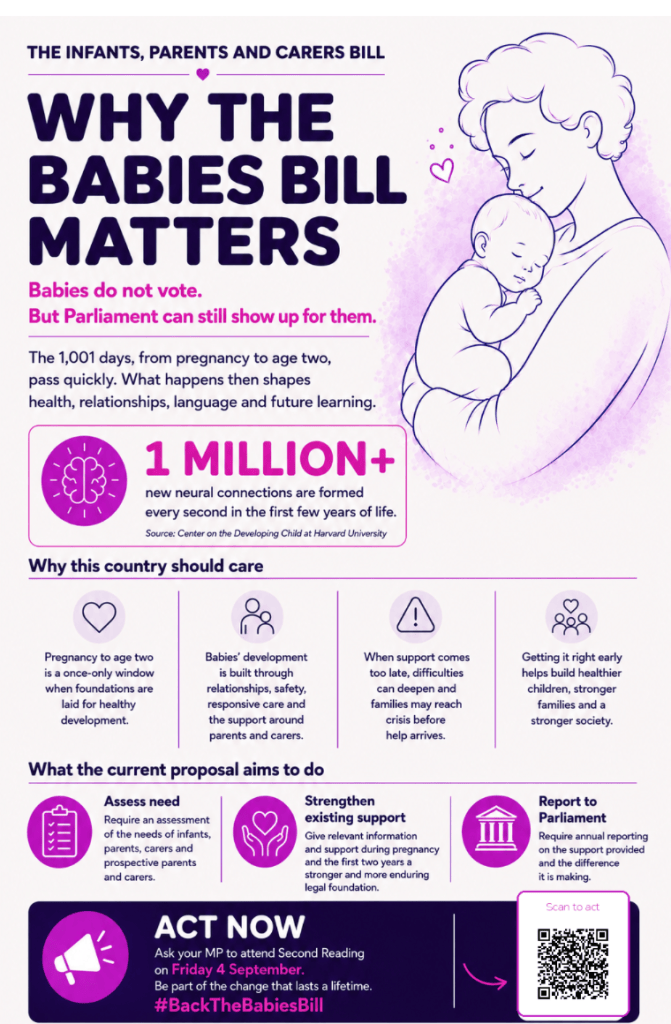
Touch is the foundation of communication during the first 1,001 days. Everything else is built on top of it.
And here’s what most people miss: the quality, consistency, and intentionality of that touch directly shapes the infant’s developing attachment system.
What Secure Attachment Actually Is (And Why It Matters)
Secure attachment isn’t a feeling. It’s a behavioural and neurobiological pattern that emerges when an infant consistently experiences responsive, attuned caregiving.
John Bowlby’s original attachment theory, later empirically validated by Mary Ainsworth’s Strange Situation experiments, established that infants develop internal working models of relationships based on repeated interactions with primary caregivers. These models—formed in the first 18-24 months—become the template for how the child expects relationships to function throughout life.
Securely attached children demonstrate a specific constellation of behaviours: they use their caregiver as a secure base for exploration, seek comfort when distressed, are easily soothed by caregiver presence, and show trust in the caregiver’s availability.
The longitudinal data is overwhelming. The Minnesota Longitudinal Study of Risk and Adaptation, which followed participants from birth to adulthood, found that secure attachment in infancy predicted better emotional regulation, social competence, and mental health outcomes 30 years later.
This isn’t correlational noise. This is structural.
And baby massage, when practised with consistency and attunement, directly activates every mechanism that builds secure attachment.
The Neurobiological Mechanisms: How Touch Builds Trust
Let me walk you through what happens at a physiological level when you massage your baby.
1. Oxytocin Release and the Bonding Circuit
Gentle, rhythmic touch stimulates C-tactile afferents—specialized nerve fibres in the skin that respond specifically to slow, stroking touch at a particular temperature and pressure. These fibres send signals directly to the insular cortex and anterior cingulate cortex, brain regions associated with emotional processing and social bonding.
This tactile stimulation triggers oxytocin release in both infant and caregiver. Oxytocin, often called the ‘bonding hormone,’ does far more than create warm feelings. It actively modulates the infant’s stress response system, reducing cortisol levels and increasing parasympathetic nervous system activity—the physiological state associated with safety and rest.
Research by Uvnäs-Moberg and colleagues has demonstrated that repeated oxytocin release through positive touch creates lasting changes in the infant’s stress regulation system, effectively ‘tuning’ their nervous system towards security rather than hypervigilance.
In caregivers, oxytocin enhances attunement and responsiveness, creating a bidirectional feedback loop: touch increases bonding hormones, which increases caregiver sensitivity, which leads to more attuned touch.
2. Stress Regulation and the HPA Axis
The hypothalamic-pituitary-adrenal (HPA) axis—the body’s central stress response system—is profoundly shaped by early caregiving experiences.
Infants who receive regular, nurturing touch show significantly lower baseline cortisol levels and more adaptive cortisol responses to stressors. A landmark study by Tiffany Field at the Touch Research Institute found that premature infants who received structured massage therapy showed 47% greater weight gain, more mature neurological development, and were discharged from hospital an average of 6 days earlier than control infants.
This isn’t about relaxation. It’s about building a stress response system that can return to baseline—the physiological foundation of emotional regulation.
Secure attachment is, at its core, the infant’s confidence that their distress will be met with consistent, effective soothing. Baby massage provides repeated, predictable experiences of transition from arousal to calm, literally training the nervous system to trust that regulation is possible and support is available.
3. Sensory Integration and Body Awareness
Baby massage provides rich, systematic sensory input that supports the development of body schema—the infant’s internal map of their physical self.
This might seem tangential to attachment, but it’s not. Secure attachment requires the infant to develop a coherent sense of self as separate from but connected to the caregiver. Touch-based practices that define body boundaries whilst maintaining relational connection support this developmental task.
Research in developmental neuroscience shows that infants who receive regular structured touch demonstrate more advanced proprioceptive development and interoceptive awareness—the ability to sense internal bodily states. This forms the foundation for emotional literacy later in life.
Why Structured Practice Matters (Not Just Any Touch)
Here’s where people often miss the distinction: baby massage isn’t simply holding your baby. It’s structured, intentional, rhythmic touch delivered in a context of attunement.
The research differentiates between passive touch (simply being held) and active, structured touch (systematic massage with clear beginning, middle, and end). The latter provides:
- Predictability: The infant learns to anticipate the sequence, which builds trust in caregiver behaviour
- Contingency: The caregiver watches and responds to the infant’s cues, demonstrating attunement
- Reciprocity: The massage becomes a dialogue, with the infant’s responses shaping the caregiver’s actions
- Consistency: Regular practice establishes reliability—the core component of secure attachment
These are precisely the conditions Ainsworth identified as necessary for secure attachment development: sensitivity, responsiveness, consistency, and appropriate pacing.
Baby massage isn’t a substitute for responsive caregiving overall—it’s a concentrated, learnable practice that builds the very skills responsive caregiving requires.
The Evidence Base: What Studies Actually Show
The research on infant massage and attachment outcomes is extensive and remarkably consistent.
A meta-analysis published in Infant Behavior and Development examined 34 studies on infant massage and found significant positive effects on parent-infant interaction quality, with particular benefits for attachment security when massage was taught as an interactive, cue-based practice rather than a mechanical routine.
Studies specifically examining attachment outcomes have found:
- Mothers who practiced infant massage showed significantly higher sensitivity scores on the Maternal Sensitivity Scale
- Infants who received regular massage demonstrated more secure attachment classifications in Strange Situation assessments at 12 months
- Fathers who learned infant massage reported increased confidence and engagement in caregiving, with corresponding increases in paternal-infant attachment security
Particularly compelling is research with at-risk populations. Studies with mothers experiencing postnatal depression found that structured infant massage programs improved maternal mood, increased positive mother-infant interactions, and partially mitigated the attachment disruption typically associated with maternal depression.
This suggests that the structure and focus that massage provides can support attachment formation even when a caregiver’s emotional capacity is compromised—though it’s not, and should never be framed as, a replacement for mental health treatment.
What This Looks Like in Practice
I teach baby massage not as a technique to apply to babies, but as a structured conversation to have with them.
You learn to read the infant’s engagement cues: Are they making eye contact? Is their body relaxed or tense? Are they turning towards your touch or away from it?
You learn to respect disengagement cues: gaze aversion, increased motor activity, colour changes, autonomic signs of stress.
You learn that the massage itself matters less than your attunement to their response to it.
This is how attachment forms. Not through perfection, but through consistent attention to the infant’s signals and appropriate response to them.
The massage becomes a safe container in which caregiver and infant practice the fundamental exchange of secure attachment: I see you. I respond to you. You can trust that your signals matter.
The Infrastructure No One Talks About
Here’s what I’ve observed over 23 years that the research hints at but doesn’t fully articulate:
Baby massage creates time-space architecture for attachment.
In an environment of constant distraction, competing demands, and ambient anxiety, baby massage establishes bounded time in which nothing else happens. No multitasking. No phones. Just presence.
This isn’t incidental. Secure attachment requires sufficient quantity of attuned interaction. Not hours necessarily, but regular, protected, undivided attention.
Baby massage provides structural permission for that attention. It’s easier to commit to ’15 minutes of massage’ than to the vague directive to ‘be more present’.
The research supports this: studies show that even short daily massage sessions (10-15 minutes) produce measurable effects on attachment-related outcomes, provided they’re consistent and interactive.
What This Actually Means
If you’re reading this as a parent or practitioner, here’s what matters:
Baby massage is not an add-on. It’s not a nice extra for people with spare time. It’s a legitimate, evidence-based practice for building the relational foundation that shapes a child’s entire developmental trajectory.
The first 1,001 days are not marketing language. They represent a critical period of neurobiological plasticity during which the attachment system, stress regulation capacity, and relational templates are established.
Touch is the primary tool available during this period. Making it structured, consistent, and attuned isn’t complicated—but it is specific.
And the return on investment, measured across a lifespan, is extraordinary.
This is infrastructure. And it’s been undervalued for far too long.