

The first 1001 days of a child’s life are crucial for development, and understanding the baby massage benefits can deeply impact this journey. The power of touch plays a vital role in bonding and neurological growth.
I’ve spent 23 years watching parents discover something extraordinary: their hands hold infrastructure.
Not metaphorically. Structurally.
When you touch your baby with intention, you’re not simply comforting them. You’re building the architecture of their nervous system. You’re laying neural pathways that will shape how they learn, attach, and regulate for the rest of their lives.
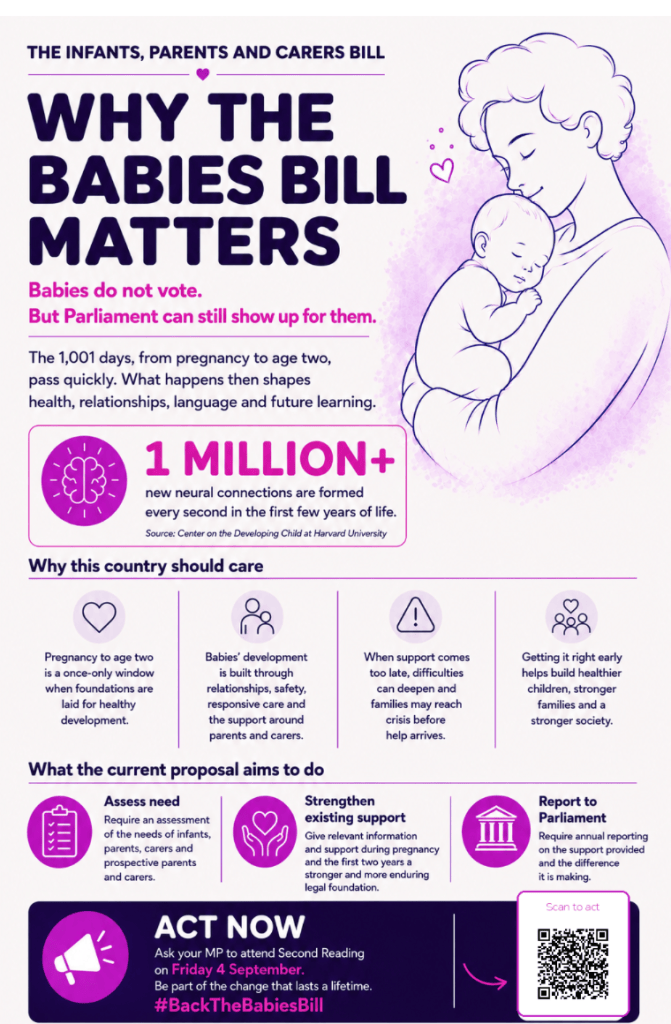
The first 1,001 days—from conception to your child’s second birthday—represent the most significant window for brain development in human life. During this period, your baby’s brain forms one million neural connections every second.
Touch doesn’t decorate this process. It drives it.
What Actually Happens When You Touch Your Baby
Let me give you the evidence first, then we’ll talk about what it means.
Research using electroencephalography shows that infant massage leads to measurable brain maturation. Very preterm infants who received regular massage developed greater alpha central regional EEG power—a marker of neurological development—measured at term equivalent age.
Clinical observations demonstrate something even more striking: infants who regularly receive touch therapy exhibit approximately 15% greater thickness in their somatosensory cortex compared to infants who don’t.
That’s not subtle. That’s structural.
Your baby’s somatosensory cortex processes touch, temperature, pain, and body awareness. When you massage your baby, you’re not just soothing them in the moment. You’re literally expanding the part of their brain that helps them understand their body and the world around them.
Touch as Neurological Scaffolding
Here’s what most people miss: touch isn’t a nice addition to development. It’s the foundation.
Early and consistent affectionate touch from you tunes the development of your baby’s somatosensory, autonomic, and immune systems. It’s not one system. It’s all of them, simultaneously.
When you stroke your baby’s skin, you activate tactile C-fibres—specialised nerve pathways designed specifically for affective touch. These pathways don’t just register sensation. They trigger a cascade of neurobiological responses that shape your baby’s stress regulation, immune function, and capacity for connection.
Think of it this way: your baby’s brain is building the wiring for lifelong learning, emotional regulation, and social connection. Touch provides the blueprint.
Without sufficient touch, the blueprint remains incomplete.
The Oxytocin Effect: Building Bonds That Last
You’ve probably heard about oxytocin—the so-called “love hormone.” But here’s what matters: skin-to-skin contact between you and your baby can increase oxytocin secretion by up to 300%.
That surge doesn’t just feel good. It programmes attachment.
A randomised controlled trial found that 12-month-old infants whose mothers massaged them more than once per week were more securely attached than infants massaged less frequently. Not slightly more secure. Measurably, significantly more secure.
And here’s the part that gives me hope: 86% of mothers in that study were still massaging their babies at follow-up, an average of 10 months later.
This isn’t a short-term intervention. It becomes part of how you parent.
Secure attachment affects your child’s physical, social, and mental health throughout their life. It shapes how they form relationships, manage stress, and navigate the world. You’re not just bonding in the moment. You’re installing the operating system for lifelong connection.
Discovering the Baby Massage Benefits for Vital Development
Why the First 1001 Days Are Non-Negotiable
The first 1,000 days aren’t marketing language. They’re biology.
From conception until your child’s second birthday, their brain undergoes rapid formation of neural connections that lay the foundation for everything that follows. The quality of stimulation in your baby’s environment during this window directly influences brain development.
This is what we call environmental enrichment—and touch is one of its most powerful forms.
Sensory experiences from conception through infancy profoundly shape your child’s nervous system development. Not moderately. Profoundly.
When you massage your baby, you’re providing systematic tactile stimulation that promotes brain development, improves sleep hygiene, and supports emotional regulation. You’re not doing something extra. You’re doing something essential.
What This Means for You as a Parent
I know what you’re thinking: this sounds important, but also overwhelming.
Let me simplify it.
You don’t need to be perfect. You don’t need special equipment. You don’t need to follow a rigid protocol.
What you need is consistency, presence, and touch that communicates love.
Baby massage is an easy, inexpensive, and loving way to increase positive touch. Research shows that when parents are taught proper massage technique and given simple support materials, most continue massaging their infants almost a year after the initial training.
This isn’t complicated. It’s repeatable.
You learn the strokes. You practise them with your baby. You make it part of your routine—perhaps before sleep, after a bath, or during a quiet moment in the afternoon. Your baby’s brain responds. Their nervous system organises. Attachment deepens.
And you get to be the one who builds that foundation.
The Ripple Effect: Beyond Your Baby
Here’s something I’ve seen again and again over two decades: when you learn to touch your baby with intention, you change too.
Research demonstrates that mothers who regularly massage their infants experience reduced anxiety, stress, and depressive symptoms. Maternal-infant interactions improve. Postpartum depression symptoms decrease.
This isn’t one-directional care. It’s a reciprocal transformation.
When you slow down enough to massage your baby, you regulate your own nervous system. You practise presence. You learn to read your baby’s cues with greater accuracy. You become more attuned, more confident, more connected.
Fathers and couples benefit as well. Touch becomes a shared language. A practice you both understand. A way of caring that doesn’t require words.
What Happens When Touch Is Missing
I need to be honest with you about something uncomfortable.
The absence of touch has consequences.
Babies who don’t receive sufficient affectionate touch show delayed development in multiple domains. Their stress regulation systems remain underdeveloped. Their capacity for secure attachment diminishes. Their neurological infrastructure remains underbuilt.
This isn’t about judgement. It’s about understanding what’s at stake.
Many parents simply don’t know that touch is this important. They weren’t taught. They didn’t see it modelled. They assumed that feeding, changing, and keeping their baby safe was enough.
It’s necessary. But it’s not sufficient.
Your baby needs your touch the way they need nutrition. It’s not optional. It’s foundational.
How to Begin
If you’re reading this and feeling behind, stop.
You’re not behind. You’re here now. That’s what matters.
Start simply:
Choose one time each day when you can be fully present with your baby—no phone, no distractions, just you and them.
Learn basic massage strokes from a qualified instructor or reputable resource. You don’t need to master everything at once. Start with legs and feet. They’re easy, and babies usually love it.
Watch your baby’s cues. If they’re calm and alert, continue. If they turn away, fuss, or seem overstimulated, pause. This is a conversation, not a protocol.
Make it part of your routine. Consistency matters more than duration. Five minutes every day builds more neural infrastructure than an hour once a week.
Be patient with yourself. You’re learning a new skill. Your baby is learning to receive it. Give yourselves time to find your rhythm.
The Larger Movement
When I trained my first baby massage instructor 23 years ago, I didn’t realise I was building infrastructure for a movement.
But that’s what’s happened.
Thousands of parents have learned to touch their babies with intention. Hundreds of instructors now teach this work. The evidence base has expanded. The research continues to validate what parents have always known intuitively: touch matters.
We’re not just teaching individual families. We’re changing the developmental landscape for an entire generation.
Every baby who receives consistent, loving touch develops a stronger foundation. Every parent who learns this practice gains confidence and connection. Every instructor who teaches this work scales intimacy without diluting it.
This is how movements grow—not through visibility, but through depth of transmission.
Your Baby’s Brain Is Waiting
Right now, in this moment, your baby’s brain is forming one million neural connections every second.
The question isn’t whether this will happen. It’s happening.
The question is: what quality of stimulation are you providing?
Your hands hold the answer.
Touch your baby with intention. Learn the strokes that communicate safety, love, and presence. Make it part of your daily rhythm. Watch what unfolds.
You’re not just comforting your baby. You’re building the infrastructure for their entire life.
And that’s not hyperbole.
That’s neuroscience.