Practical, relationship-centred professional development
Training to support parent and baby wellbeing and relationships in the first 1001 days
From pregnancy to age two, starting with the needs of the baby.
An evolution of our work: bespoke, policy-reflective teacher training that goes beyond standard parent and baby wellness teacher training. Unique, tailored and based on over 20 years’ experience of training thousands globally.
Warm, practical training for professionals supporting babies and families, delivered by Gayle Berry, founder of Blossom & Berry. Each programme is a professional qualification certified through Blossom & Berry, with clear modules, marked assessments and a certificate at the end, and we tailor delivery to meet your staff’s needs.
For commissioners
Workforce training at a glance
Why now? Family Hub teams are supporting more families with perinatal anxiety and wellbeing needs, often with stretched budgets and staff time. Best Start for Life, Family Hubs and Healthy Babies guidance place parent–infant relationships and perinatal mental health at the heart of support in the first 1,001 days.
What we deliver
- Live interactive online sessions and self-paced learning
- Little or no venue and staff travel costs for online options
- Blended learning with optional practical days
- Workforce capacity building for early years, family support and outreach teams
- Options for weekly, monthly and quarterly live support and supervision
Support across universal and targeted pathways
- Early intervention through everyday parent–baby groups
- Co-regulation, attachment and responsive caregiving
- Practical tools staff can use in groups and home visits
- Kept access to learning materials on qualifying courses
How our training aligns with Family Hub priorities
| Training focus | Family Hub priority | Intended benefit for families |
|---|---|---|
| Baby Massage & responsive touch | Parent–infant relationships: supporting early bonding and secure attachment. | Helps staff support parental confidence and calm, connected parent–baby time. |
| Baby Yoga, breath & co-regulation | Perinatal mental health and wellbeing: supporting parents’ emotional wellbeing. | Gives staff simple calming and co-regulation activities to share in groups. |
| Tree Babies sensory & nature-based play | Early communication and home learning: supporting development in the first 1,001 days. | Encourages parent–baby attunement, play and non-verbal communication. |
| Nurtured Nursery & inclusive delivery | Reducing inequalities: reaching fathers, co-parents and families who rarely attend. | Gives staff adaptable approaches for different families and settings. |
This table shows relevance to published guidance. It is not a statement of government endorsement, funding eligibility or guaranteed outcomes.
Credentials
Federation of Holistic Therapists (FHT) · IICT · CThA Certified through Blossom & Berry. Trusted by NHS trusts, Sure Start centres and charities across the UK.

Programme 01
Baby Massage Practitioner Training
Nurturing touch offers opportunities for communication, shared attention and connection. Our training prepares practitioners to facilitate respectful, inclusive baby massage experiences with parents and caregivers.
Professionalism
What you can and can’t teach, our manifesto to teach love, setting up your practice, legal issues and practicalities.
Anatomy & Physiology
How the infant body differs from the adult, how massage affects the body, infant mental health and early childhood development.
Benefits
The benefits and history of baby massage, and the research that supports its practice.
Practicalities & Routine
The massage routine, adapting for different babies (such as additional needs or reflux), filmed teaching practice and discussion topics for parents.
Successful Teaching Techniques
How to teach, troubleshooting in class, teaching plans and resources, workshops and one-to-ones.
Marketing Your Classes
Promoting your classes and reaching the families who would benefit most, with resources to help you get started.
Plus a case study: Teach a 4-week baby massage course to a group of three or more parents and babies, then submit parent evaluations and a reflective write-up for assessment.
Relevant priorities: early relational health, caregiver confidence, responsive interaction and community support.
The six written modules

Professional Baby Massage & Infant Wellness Instructor Certificate
Most learners qualify in 12 weeks
Around 50 hours (4–6 hours per module)
6 written modules + case study, 80% pass mark per module
Fully insured through Westminster Indemnity Insurance
Certified through Blossom & Berry, accredited by Federation of Holistic Therapists (FHT) · IICT · CThA · Was approved by the Royal College of Midwives
Programme 02
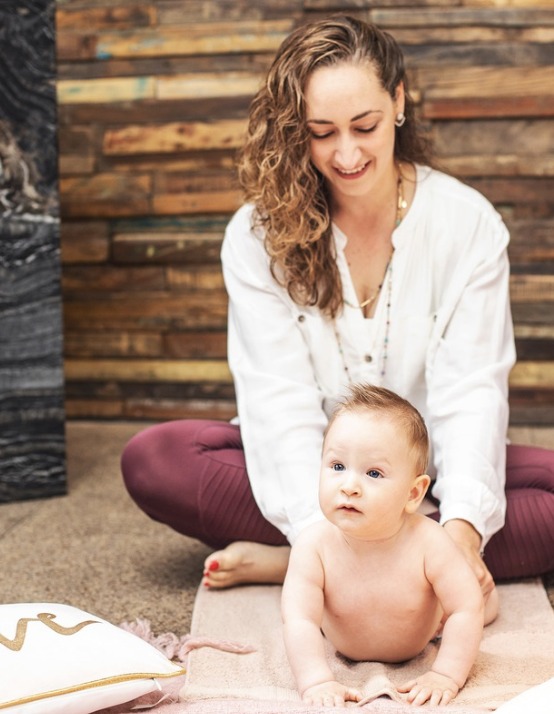
Baby Yoga Practitioner Training
Our baby yoga training equips practitioners to guide gentle, developmentally appropriate shared movement and playful interaction while prioritising each baby’s readiness, comfort and cues.
Professionalism
What you can and can’t teach, our manifesto to teach love, setting up your practice, legal issues and practicalities.
Anatomy & Physiology
How the infant body differs from the adult, how yoga affects the body, infant mental health and early childhood development.
Benefits
The benefits and history of baby yoga, and the research that supports its practice.
Practicalities & Routine
The baby yoga sequence and routine, adapting for different babies (such as additional needs or reflux), filmed teaching practice and discussion topics for parents.
Successful Teaching Techniques
How to teach, troubleshooting in class, teaching plans and resources, workshops and one-to-ones.
Marketing Your Classes
Promoting your classes and reaching the families who would benefit most, with resources to help you get started.
Plus a case study: Teach a 4-week baby yoga course to a group of three or more parents and babies, then submit parent evaluations and a reflective write-up for assessment.
Relevant priorities: parent-infant interaction, responsive play, early learning opportunities and caregiver wellbeing.
The six written modules
Qualification
Professional Baby Yoga & Developmental Play Instructor Certificate
Time to qualify
Most learners qualify in 12 weeks
Study time
Around 50 hours (4–6 hours per module)
Assessment
6 written modules + case study
Insurance
Fully insured through Westminster Indemnity Insurance
Accreditation
Certified through Blossom & Berry, accredited by Federation of Holistic Therapists (FHT) · IICT · CThA · Was approved by the Royal College of Midwives
Programme 03
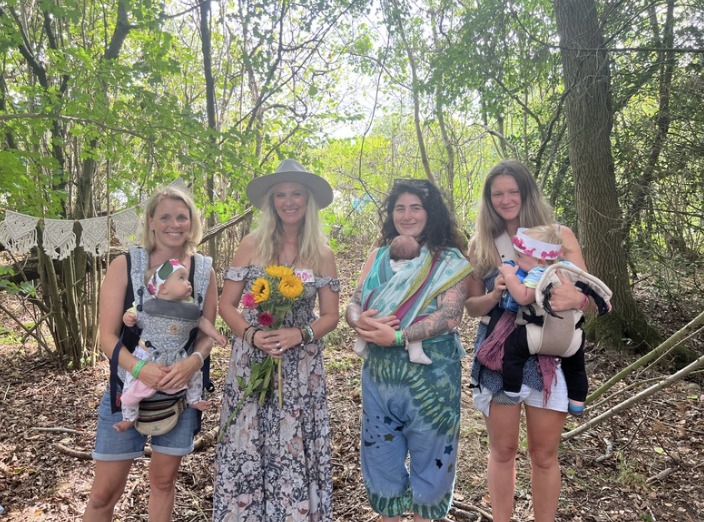
Tree Babies Nature Connection Training
Tree Babies is about the relationship between caregiver and baby being held in nature. The natural environment offers opportunities for shared attention, caregiver restoration, sensory discovery and connection with others.
Forest Bathing & Sensory Awareness
Principles of Shinrin-Yoku (forest bathing) and leading mindful, sensory-rich experiences outdoors.
Mindfulness & Presence
Simple grounding and meditation practices for parents and babies; breath, stillness and embodied awareness.
Babywearing & Connection
Safe babywearing for outdoor exploration, and holding emotional and physical space for parents and infants.
Creative Nature Play
Nature art, mandalas and gratitude circles; storytelling, singing and seasonal rituals.
Seasonal Flow
Designing sessions that ebb and flow with the rhythms of nature and the seasons.
Professional Practice
Planning and leading Tree Babies sessions, creating inclusive, safe spaces, and launching your groups.
No case study: Tree Babies is delivered fully online and assessed on the six written modules with self-reflective practice. We can also add an optional one-day nature immersion on site for your practitioners.
Relevant priorities: caregiver wellbeing, social connection, inclusive outdoor experiences and community provision.
The six written modules

Qualification
Professional Certificate in Nature-Based Parent & Baby Wellness: Tree Babies Guide
Time to qualify
Most learners qualify in 6–8 weeks
Study time
Around 20 hours (about 4 hours per module)
Assessment
6 written modules + self-reflective practice
Insurance
Fully insured through Westminster Indemnity Insurance
Accreditation
Certified and accredited by Blossom & Berry

Programme 04
The Nurtured Nursery™ Certificate
Babies don’t just hear our voices, they feel our tone and our presence. This CPD course helps nursery and early years teams understand how their own regulation, touch and tone shape the babies in their care, and how to bring more calm, connection and loving awareness into the baby room. We can deliver it to your whole team, so everyone shares one nurture-informed approach.
The Foundations of Nurtured Care
Why love matters in the first 1001 days, the developing brain and body, emotional safety and attachment theory, and links to the EYFS and Ofsted.
Practitioner Regulation & Reflective Practice
Understanding your own nervous system, somatic self-checks and presence, breath, pause, voice and tone, and professional reflection and journaling.
The Power of Touch & Consent
Appropriate nurturing touch in nursery settings, holding and safe cuddling, consent and body autonomy in infants, and safeguarding awareness.
Movement for Bonding & Regulation
Gentle, baby-friendly movement, nap-time and playtime routines, rhythm, voice and group calm-down rituals, and movement risk assessment.
Building a Nurtured Nursery Culture
Creating calm in busy spaces, inclusive practice and emotional diversity, talking to parents about wellbeing, and writing your setting’s Nurture-Informed Practice Pledge.
How it works: This is a shorter CPD course rather than a practitioner qualification. It is delivered online, with live Q&A sessions, a practitioner daily check-in tool, the Nurture-Informed Practice Pledge team poster, and a CPD Certificate of Completion. No prior baby massage or yoga experience is needed, and it is not hands-on massage training.
Relevant priorities: responsive caregiving in baby rooms, emotional wellbeing, practitioner wellbeing, EYFS and Ofsted expectations.
The five video modules
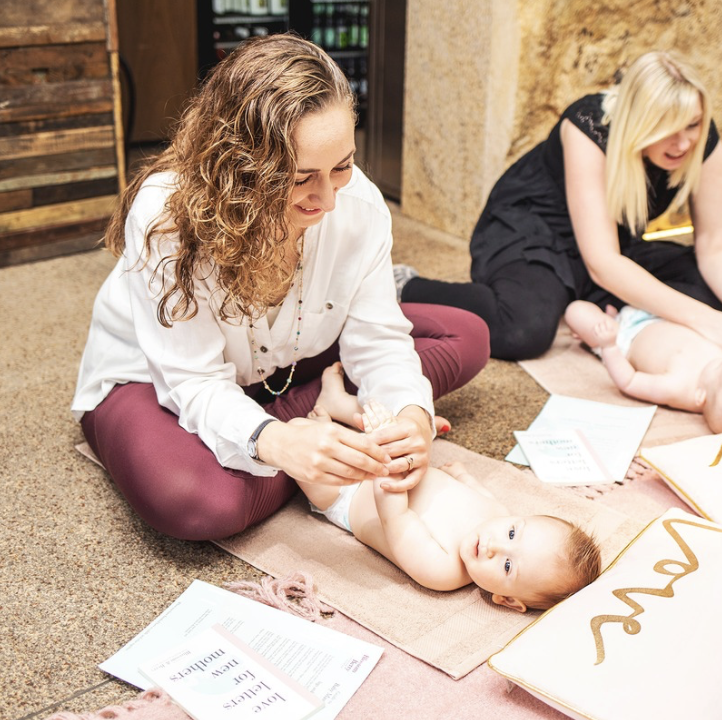
The Nurtured Nursery™ CPD Certificate
Most learners complete it in a few weeks, at your own pace
3–5 hours of CPD (about 5 hours of recorded lessons)
Short written assignment, with personal feedback from Gayle
Fully insured through Westminster Indemnity Insurance
CPD-accredited, with a Blossom & Berry CPD Certificate of Completion
Your route to qualifying
A clear pathway from enrolment to certificate
Our Baby Massage, Baby Yoga and Tree Babies practitioner courses are structured like a professional qualification, so your staff know exactly what they’ll study, how they’ll be assessed and what they’ll receive at the end. Nurtured Nursery is a shorter CPD course with a certificate of completion.
What they get at the end
- A professional certificate through Blossom & Berry
- Professional indemnity insurance through Westminster Indemnity Insurance
- Confidence to run classes, workshops and one-to-ones
- Lifetime access to materials and ongoing support
Enrol and get set up
Your practitioners get access to the online learning platform, in-depth workbook, video lessons and reading lists.
Study six written modules
At their own pace, around 4 hours a week. Each module ends with short and longer answer questions. No Harvard referencing; they can write in the first person.
Submit and pass each module
Every module is marked personally by your trainers and returned within 10–14 days. A mark of 80% is needed to pass; if not, the paper comes back with support to resubmit.
Teaching practice case study
Baby Massage and Baby Yoga only: teach a 4-week course to three or more parents and babies, then submit parent evaluations and a reflective write-up. Tree Babies has no case study: it is assessed on the six written modules with self-reflective practice, with an optional one-day nature immersion on site.
Qualify and practise
They receive a professional certificate through Blossom & Berry, are covered through Westminster Indemnity Insurance, and can run classes, workshops and one-to-one sessions professionally.
Completion: all modules and case studies must be completed within 12 months of enrolment. If writing is a challenge, work can be submitted as bullet points, audio or video.
Support throughout and beyond
Your practitioners are never on their own
Personal feedback on every module, regular check in calls dependent on what training package you choose including the options below. We build a package to suit you.
Live
Live online two-day training and real-time Zoom sessions with your trainers.
Weekly
Live weekly office hours with Gayle and the mentoring team.
Monthly
Live monthly group supervision to reflect on practice and ask questions.
Quarterly
Quarterly online learning sessions to keep growing your practice.
12 months
A year of community support, mentoring and supervision after enrolment.
Acess
Access to course materials, class plans, scripts and facilitator guides.
Ways to train
Blended, online or built entirely around you
Every option includes live weekly and monthly supervision, mentoring and training, so your practitioners are supported however they learn.
Blended training
Online learning followed by a practical immersion day together, so your staff build knowledge first, then practise hands-on with us.
-
Online modules, workbook and video lessons
-
One practical immersion day, in person
-
Live weekly and monthly supervision
Fully online
All the learning can happen online, at your staff’s own pace, with live sessions so no one learns alone.
-
Online modules and live Zoom training
-
Weekly and monthly live supervision
-
Quarterly online learning sessions
Bespoke packages
We can build and create any bespoke training package for your organisation, shaped around your staff, your setting and the families you support.
-
Whole teams or individual places
-
Immersion days at your setting
-
Supervision and mentoring to suit you
Our principles & training framework
Heart-led, evidence-informed and in step with policy
Our framework brings together Gayle’s Love Creates Love philosophy with what government guidance asks of high-quality early years and Family Hub workforce training: clear outcomes, a strong evidence base, practical learning, ongoing supervision and inclusive, safe practice. Seven principles guide everything we teach.
Relationships come first
Everything starts with the relationship between baby, parent and practitioner. We centre co-regulation, attachment and the importance of love and nurturing care.
In our training
- Reading baby cues and responsive interaction in every module
- Working alongside parents as partners, never prescribing perfect parenting
Relevant to
Rooted in evidence and experience
We bring together the science of early development, attachment and infant mental health with over 20 years of frontline practice, and we’re honest about what the research does and doesn’t show.
In our training
- Anatomy & physiology, infant mental health and research modules
- A trainer with Sure Start and funded-training experience
Relevant to
Learning by doing
Practitioners see it, try it and get feedback. Confidence comes from practising with real families, not just reading about it.
In our training
- Live training with Gayle, demonstrations and video lessons
- A teaching practice case study with parents and babies
Relevant to
Sustained, reflective support
Learning doesn’t stop after the training day. Reflection and supervision help new skills become everyday practice.
In our training
- Weekly office hours and monthly group supervision
- 12 months of mentoring and lifetime access to materials
Relevant to
Every baby and family belongs
Each baby is unique. We teach practitioners to adapt for different babies, cultures, languages and additional needs, so every family feels welcome.
In our training
- Adapting for additional needs, reflux and individual readiness
- Coursework can be submitted as bullet points, audio or video
Relevant to
Safe, consent-led practice
Care is built on safety, choice and clear professional boundaries. Practitioners learn consent-sensitive touch, safe handling and when to signpost a family on.
In our training
- Consent-sensitive touch, safe movement and risk awareness
- What you can and can’t teach, and legal and professional practice
Relevant to
Planned with you, measured together
We agree goals with your leaders first, set clear learning outcomes and check that the training makes a difference to your staff and families.
In our training
- Every module personally marked
- Parent evaluations, plus any service evaluation agreed in your proposal
Relevant to
How every course is delivered
A four-stage cycle that turns learning into everyday practice
Based on the Education Endowment Foundation’s building blocks of effective professional development: build knowledge, develop techniques and embed them in practice.
Learn
Six written modules, an in-depth workbook, video lessons and reading lists build secure knowledge.
See it modelled
Live training with Gayle, demonstrations, class plans and facilitator scripts.
Practise with feedback
Teaching practice with real families and personal marking on every module within 10–14 days.
Embed and reflect
Weekly office hours, monthly group supervision and 12 months of mentoring keep it going.
Policy relevance
How our framework relates to current policy and guidance
We’ve looked closely at what government guidance asks of early years and Family Hub workforce training, and shaped our framework around it. At its centre is the first 1001 days: the Best Start for Life vision and the First 1001 Days Movement.
This explains relevance, not accreditation or endorsement. Specific alignment and funding eligibility depend on each service, programme and commissioning specification, and we’ll map our training to yours.
DfE Standard for teachers’ professional development
What it emphasises: Five principles: focus on outcomes, robust evidence and expertise, collaboration and expert challenge, sustained over time, and prioritised by leadership.
How we respond: Our courses run over 12 weeks with ongoing supervision, are led by experienced trainers, and are planned with your managers around your service’s goals.
EEF Effective Professional Development (2021)
What it emphasises: Effective training builds knowledge, motivates staff, develops practical techniques and embeds practice through feedback, action planning and repetition.
How we respond: Our four-stage delivery cycle follows these building blocks: learn, see it modelled, practise with feedback, then embed it with ongoing support.
Early Years Foundation Stage: four overarching principles
What it emphasises: A unique child, positive relationships, enabling environments with teaching and support from adults, and learning and development at each child’s own pace.
How we respond: Practitioners learn to follow each baby’s cues, build warm relationships with families and create calm, welcoming spaces. EYFS requirements apply to specific settings and do not accredit these courses.
Teachers’ Standards (Early Years)
What it emphasises: Includes understanding attachment, communicating sensitively with babies, engaging parents and carers, adapting to each child, and safeguarding.
How we respond: Attachment, infant communication and working alongside parents run through every module.
Early Years Educator (Level 3) criteria
What it emphasises: Child development, SEND, safeguarding, health and wellbeing, and partnership with parents and other professionals.
How we respond: Our courses build these capabilities as specialist CPD. They are not a Level 3 Early Years Educator qualification.
Best Start Family Hubs: parent–infant relationships and perinatal mental health
What it emphasises: A high-quality training and supervision offer for the workforce, reflective supervision, trauma-informed and inclusive practice, and clear referral pathways.
How we respond: Monthly group supervision, weekly office hours and teaching that is trauma-aware and inclusive, with clear guidance on when to signpost families on.
Giving every child the best start in life (2025)
What it emphasises: Better family services from pregnancy to age five, and higher-quality early years provision.
How we respond: We help Family Hubs and early years teams offer warm, accessible parent and baby sessions in their communities.
The Best Start for Life: a vision for the 1,001 critical days (2021)
What it emphasises: The 1,001 critical days from conception to age two set the foundations for lifelong emotional and physical wellbeing. The vision starts with the needs of the baby and calls for a joined-up Start for Life offer, Family Hubs and an empowered Start for Life workforce, with parent–infant relationships and perinatal mental health at its core.
How we respond: We train and support the Start for Life workforce to strengthen parent–infant relationships, with ongoing supervision so skills keep growing after the course.
First 1001 Days Movement
What it emphasises: Babies’ emotional wellbeing and development matter. Every baby should have loving, nurturing relationships, and sensitive, responsive care is at the heart of healthy development from pregnancy to age two.
How we respond: Every programme centres babies’ emotional wellbeing and the relationship between baby and parent. Gayle is a member of the Movement.
WHO/UNICEF Nurturing Care Framework
What it emphasises: Responsive caregiving, opportunities for early learning, and caregiver support within safe, nurturing environments.
How we respond: Our approach is relevant to these components. The WHO framework’s five components are distinct from our five embodied pathways.
Royal Foundation Centre for Early Childhood
What it emphasises: The significance of the earliest years for lifelong outcomes.
How we respond: A shared thematic emphasis; no partnership or endorsement is implied.
Flexible commissioning conversations
We can explore individual places, whole staff cohorts, in-person training days and follow-up support shaped around your service. Dates, delivery format, fees and any evaluation you need will be set out in a written proposal for your team.
Workforce Training Prospectus
A commissioner-facing overview of our programmes, delivery options and organisational information.
Blog
Baby massage & baby yoga instructor training, in the first 1001 days
Short, two-minute reads for practitioners and teams. What instructor training involves, and how it supports loving parent–infant relationships, Family Hubs and an empowered Start for Life workforce.
How to become a baby massage instructor in the UK
What baby massage instructor training involves, how long it takes, and why the role matters so much in the first 1001 days.
Read article: How to become a baby massage instructor in the UK
Baby yoga teacher training: what to expect
Course content, assessment and support, and how baby yoga classes support loving parent–infant relationships.
Infant massage training for Family Hub teams
How infant massage training helps Family Hub practitioners offer warm, relationship-centred support as part of the Start for Life offer.
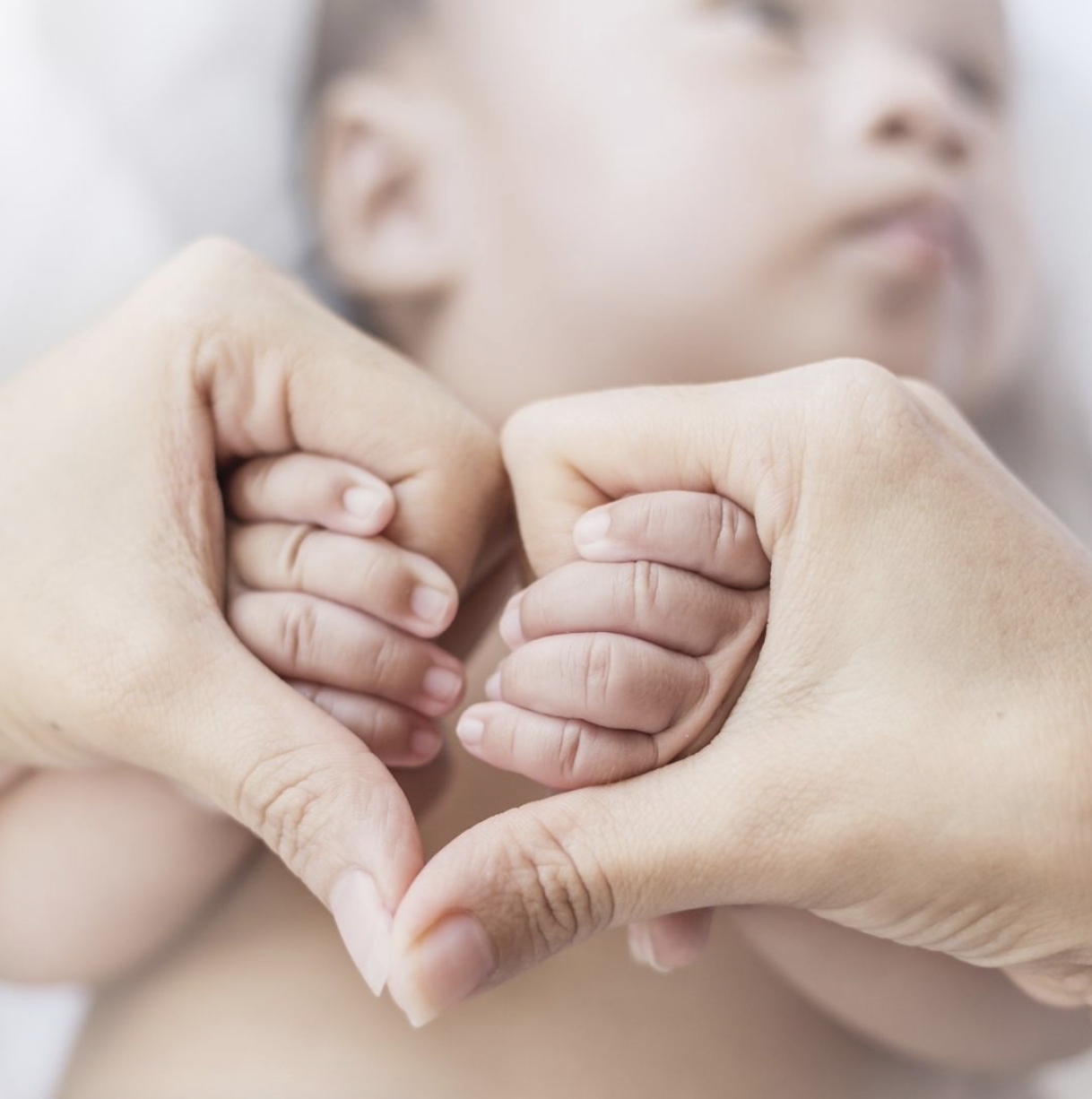
Baby massage and the first 1001 days: why loving touch matters
Why loving, responsive touch matters from pregnancy to age two, and how baby massage instructors help parents connect.
Read article: Baby massage and the first 1001 days: why loving touch matters
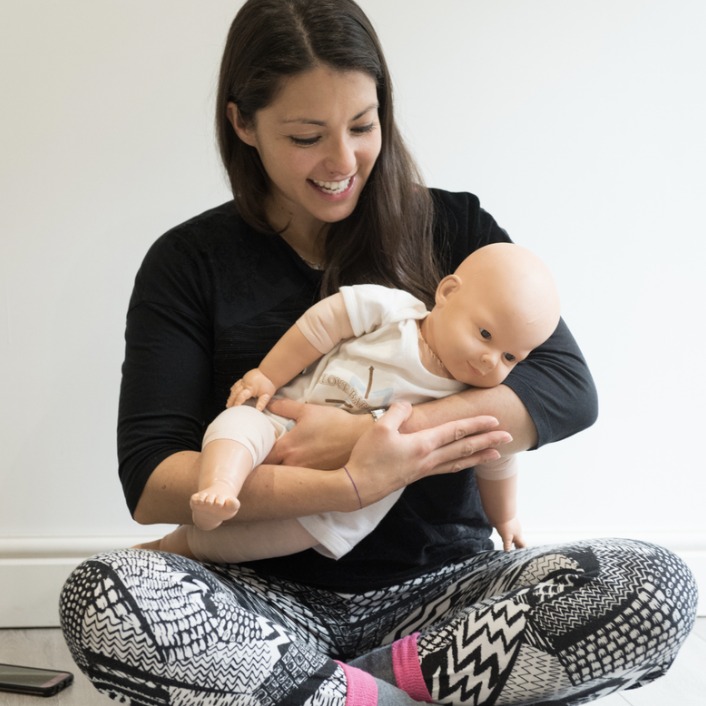
Building an empowered Start for Life workforce
The Best Start for Life vision calls for an empowered workforce. Here’s how relationship-centred training can help.
Read article: Building an empowered Start for Life workforce
How to choose accredited baby massage training
Six questions to ask about accreditation, insurance, assessment and support before you choose a baby massage course.
Read article: How to choose accredited baby massage training
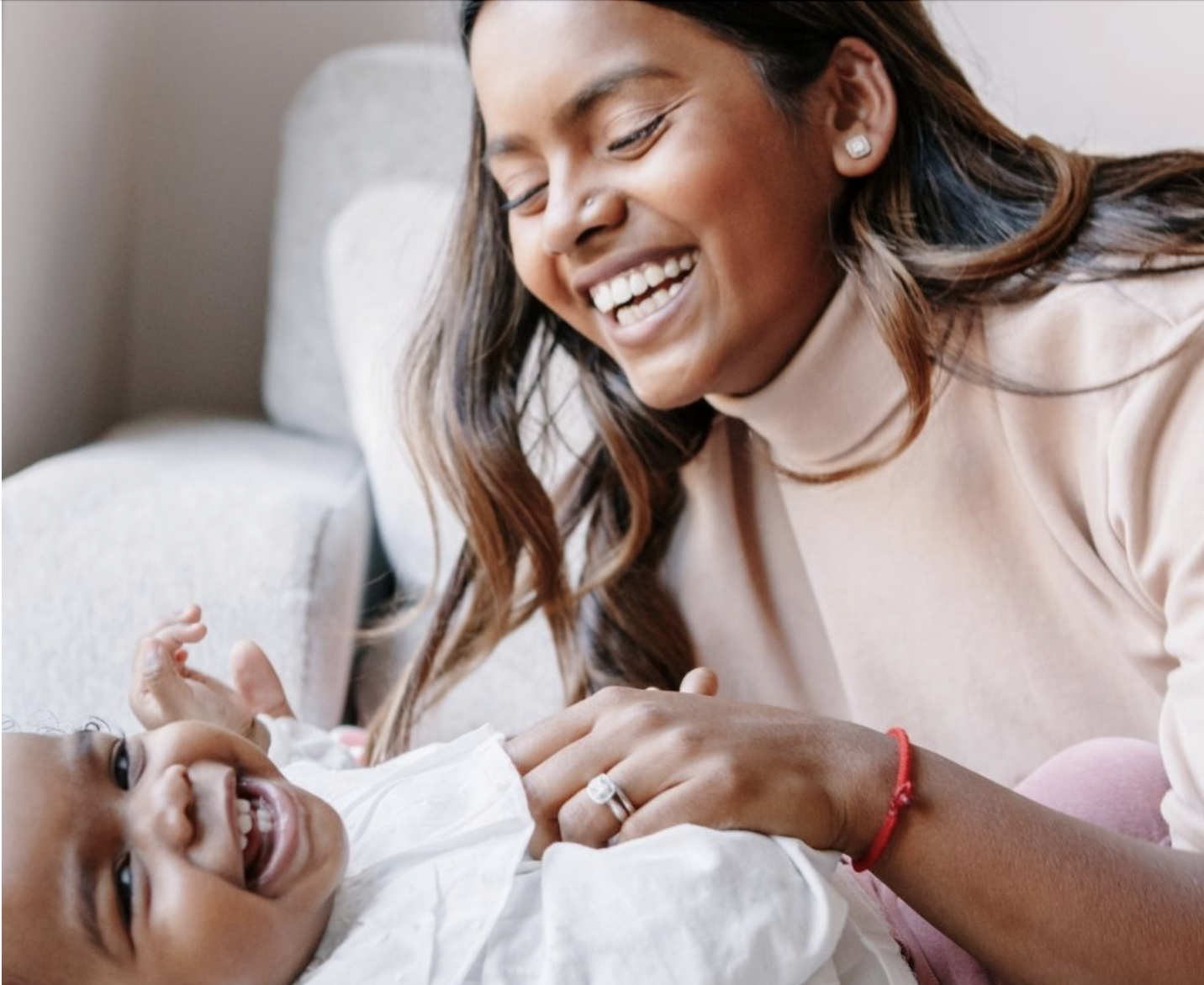
Baby yoga, co-regulation and attachment: a guide for practitioners
How baby yoga sessions can support co-regulation and secure attachment between parents and babies.
Read article: Baby yoga, co-regulation and attachment: a guide for practitioners
Supporting perinatal mental health through baby massage and yoga classes
How practitioners can create calm, supportive classes that are mindful of parents’ perinatal mental health.
Read article: Supporting perinatal mental health through baby massage and yoga classes
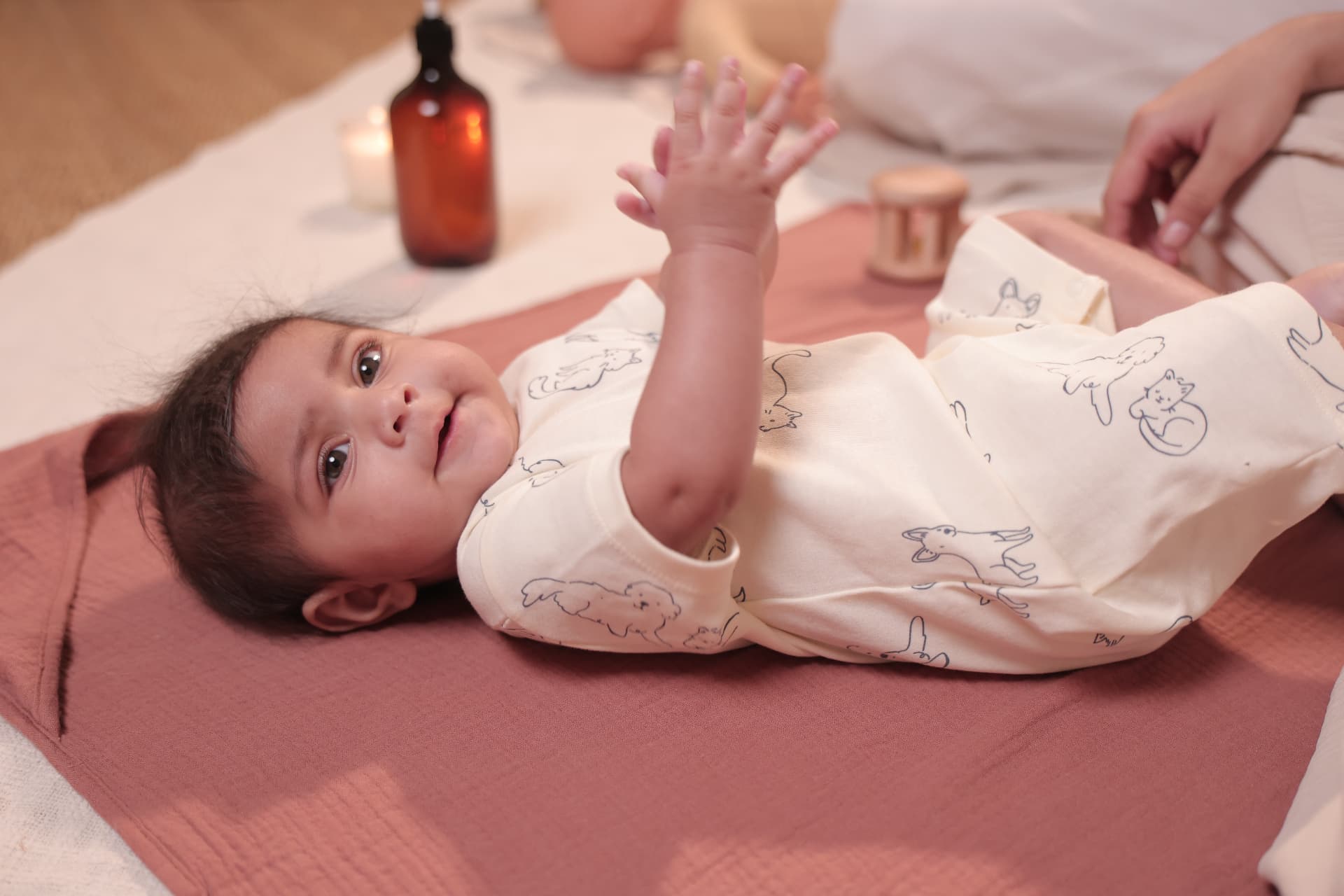
Nurturing touch in the baby room: CPD for nursery teams
How nurturing touch, movement and consent-led care support babies in nursery, and how it links to the EYFS.
Read article: Nurturing touch in the baby room: CPD for nursery teams
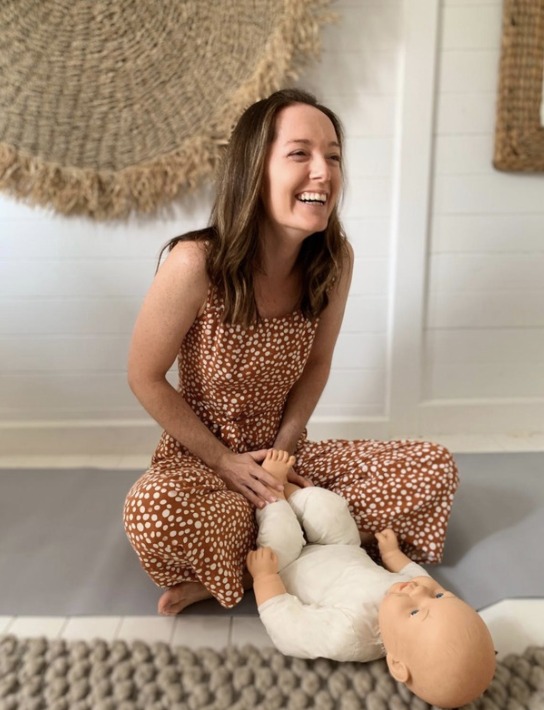
Online or blended baby massage instructor training: which suits your team?
Comparing online, blended and bespoke instructor training, and how to choose what works for your team.
Read article: Online or blended baby massage instructor training: which suits your team?