
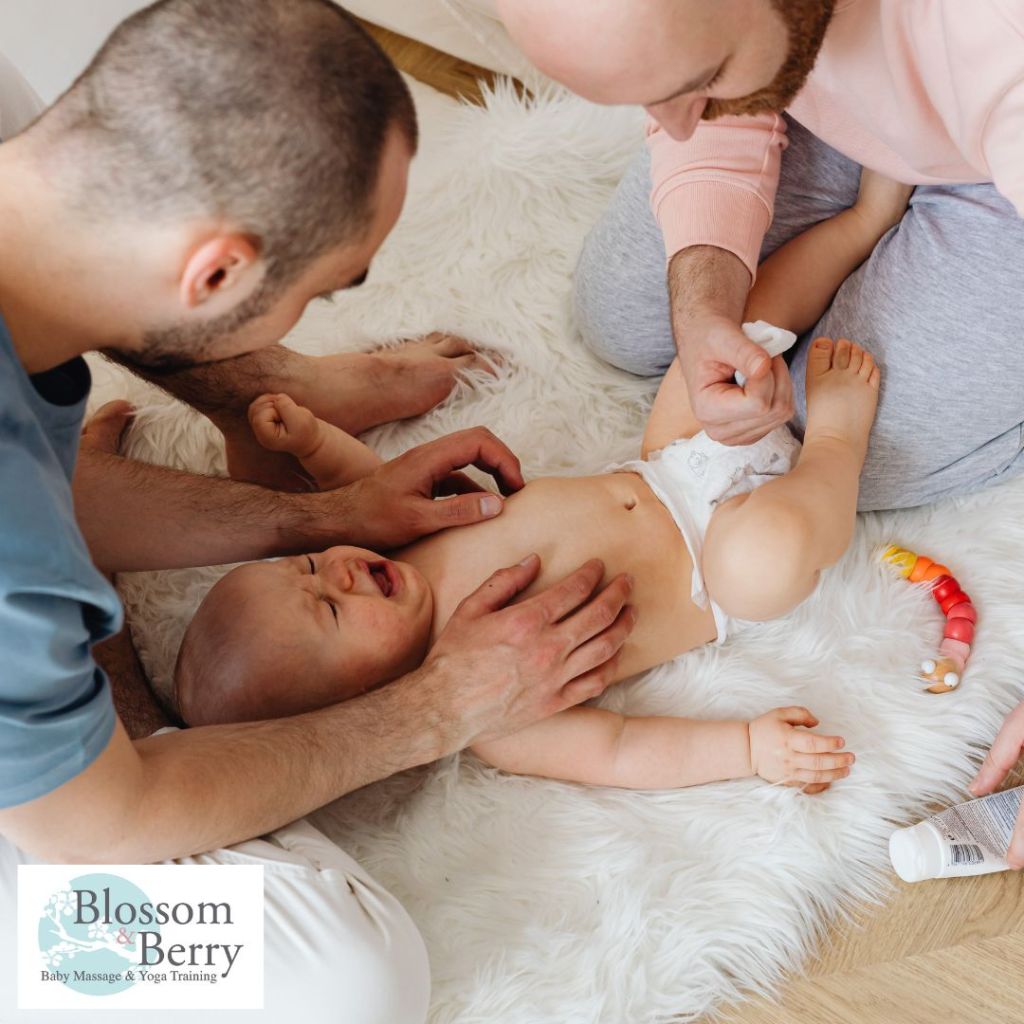
Baby massage is a beautiful way to bond, but it should never be a one-way street. The most critical element of a successful massage isn’t your technique, it’s honoring your baby’s consent.
If a massage causes your baby to feel anxious or overwhelmed, the physical benefits are lost. Knowing when not to massage is just as important as knowing how.
How to Tell if Your Baby is Stressed
Babies can’t tell us “no” with words, but they are masters of body language. If you notice these 10 signs of stress, it is time to stop the massage, offer comfort, and try again another time.
-
Inconsolable Crying: If your baby is crying more than usual or cannot be soothed by your touch, they are likely overstimulated.
-
Heightened Fussiness: Irritability, squirming, or an arched back are clear indicators of discomfort.
-
Tense Body Language: Look for clenched fists, rigid limbs, or a stiffened torso. A relaxed baby should feel “supple” to the touch.
-
Avoidance Behaviors: If your baby turns their head away, avoids eye contact, or becomes suddenly unresponsive, they are “shutting down” to cope with overstimulation.
-
Excessive Startling: A stressed baby is often in a state of high alert, reacting jumpily to small noises or sudden movements.
-
Clinginess: If your baby is reaching for you to be picked up rather than enjoying the massage strokes, they are seeking security over stimulation.
-
Changes in Feeding: Stress can lead to a sudden disinterest in nursing or difficulty latching immediately following a session.
-
Sleep Disruptions: While massage usually helps sleep, doing it when a baby is already stressed can have the opposite effect, leading to frequent night waking.
-
Skin Fluctuations: Watch for physical changes like a suddenly flushed or very pale complexion, or even stress-related hives.
-
Digestive Changes: In some cases, prolonged stress can manifest as irregular bowel movements or digestive upset.
The Golden Rule: Follow Their Lead
It is important to remember that these signs can also be caused by hunger, teething, or illness. However, if these cues appear during a massage, stop immediately. By responding to your baby’s “no,” you are building a foundation of trust and teaching them that their physical boundaries are respected.
Expert Tip: Always ask your baby for “permission” before starting. Place a little oil on your hands, hold them near your baby’s face, and wait for a relaxed posture or eye contact before beginning.
If your baby consistently shows signs of high stress or discomfort, it’s always a good idea to consult your pediatrician to rule out underlying issues.
Join our Baby Massage & Yoga Teacher Training and start a career that changes lives, starting with the heart.

