

How Baby Massage, Yoga, Rhythm, Breath, Sound & the Love Bubble Lay the Foundation for a Thriving Life
“The greatest gift you can give your baby is not a toy, a gadget, or a perfectly organised nursery. It is your presence, your touch, and your love — offered freely, consistently, and with your whole heart.”
Why the First 60 Days Are Unlike Any Other Time in Human Life
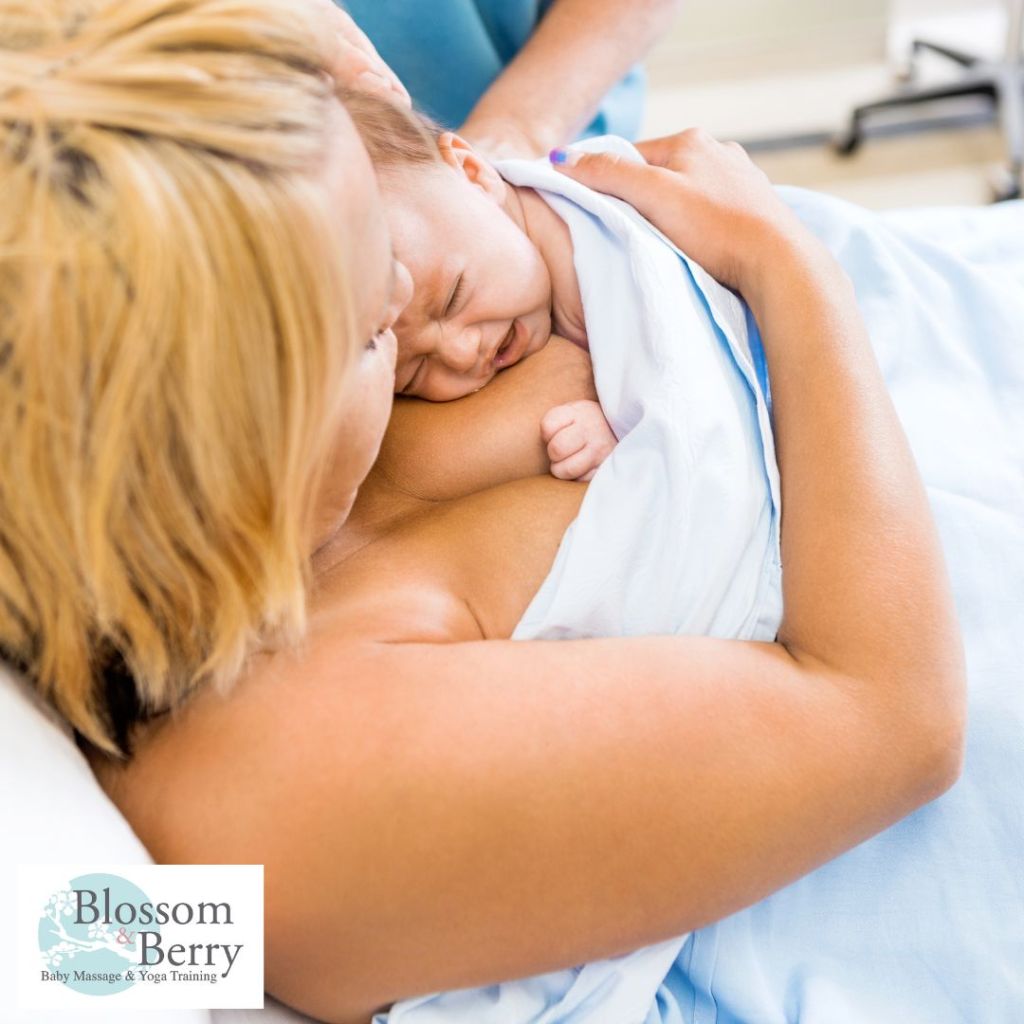
There is a moment, somewhere in the first hours after birth, when a mother lifts her newborn onto her chest and the world seems to hold its breath. In that moment — skin against skin, breath matching breath, heartbeat mirroring heartbeat — something ancient and extraordinary is being set into motion. Science now confirms what mothers have always felt in their bones: these first weeks are unlike any other window in the entire human lifespan.
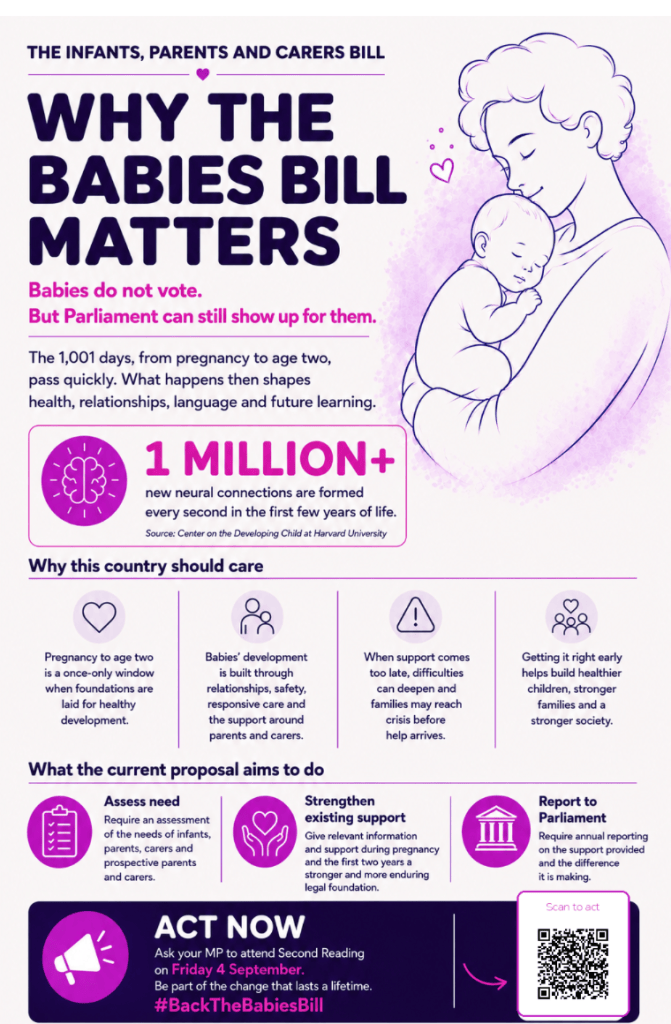
The human brain begins forming approximately two weeks after conception, but it is outside the womb — in the arms of a loving caregiver — that its most fundamental architecture takes shape. From the moment of birth, the infant brain is forming up to one million new neural connections per second. Harvard Center on the Developing Child describes this as a period of breathtaking neural construction, where the very scaffolding of who a child will become — their capacity for love, language, learning, and regulation — is being built, layer by exquisite layer.
The first 60 days sit at the very heart of what neuroscientists call the “Fourth Trimester” — a concept originally articulated by Dr. Harvey Karp describing the 12 weeks after birth as a transition period during which the newborn is neurologically still completing a developmental journey that began in the womb. Columbia University Medical Centre notes that this transitional phase is just as critical as any of the three trimesters that preceded it, for both mother and baby. Yet in modern Western culture, this sacred window is often rushed, undervalued, and misunderstood.
Thirty years of neuroscience research now makes this unmistakably clear: what happens in these first weeks — the quality of touch received, the sounds heard, the eye contact shared, the rhythm and breath of the caregiving environment — does not simply comfort the infant. It actively constructs the brain. Brain Development and the Role of Experience in the Early Years, PMC
The Somatic Gateway: Why the Body Is the First Language
Long before a baby can smile, speak, or reach, they are communicating through the most primal and universal language available to them: the body. In a somatic understanding of infant development, the nervous system is not simply a passive receiver of the world — it is an active participant in co-creating it.
The newborn arrives with a fully-functional somatosensory system. Touch is the first sense to develop in utero and the first to be available after birth. The skin — the largest organ of the human body — is essentially an extension of the nervous system, embryologically derived from the same ectodermal tissue as the brain itself.
Research published in Developmental Cognitive Neuroscience demonstrates that the infant brain is sensitive to gentle skin stroking within the very first weeks of life — with significant activation observed in both the postcentral gyrus (the brain’s primary touch-processing region) and the posterior insular cortex, the area associated with socio-affective, emotionally-meaningful touch. This study showed this sensitivity from as early as 11 days of age.Neural Correlates of Gentle Skin Stroking in Early Infancy, PMC
The specific neural pathway at work here is the C-Tactile (CT) afferent system — a dedicated network of unmyelinated nerve fibres that respond selectively to gentle, caress-like stroking at a specific velocity (approximately 1–10 cm/s). Research from Oxford University demonstrated that CT afferents are active in infants, and that gentle stroking activates the posterior insular cortex, the brain’s centre for affective, pleasurable touch. University of Oxford Department of Paediatrics
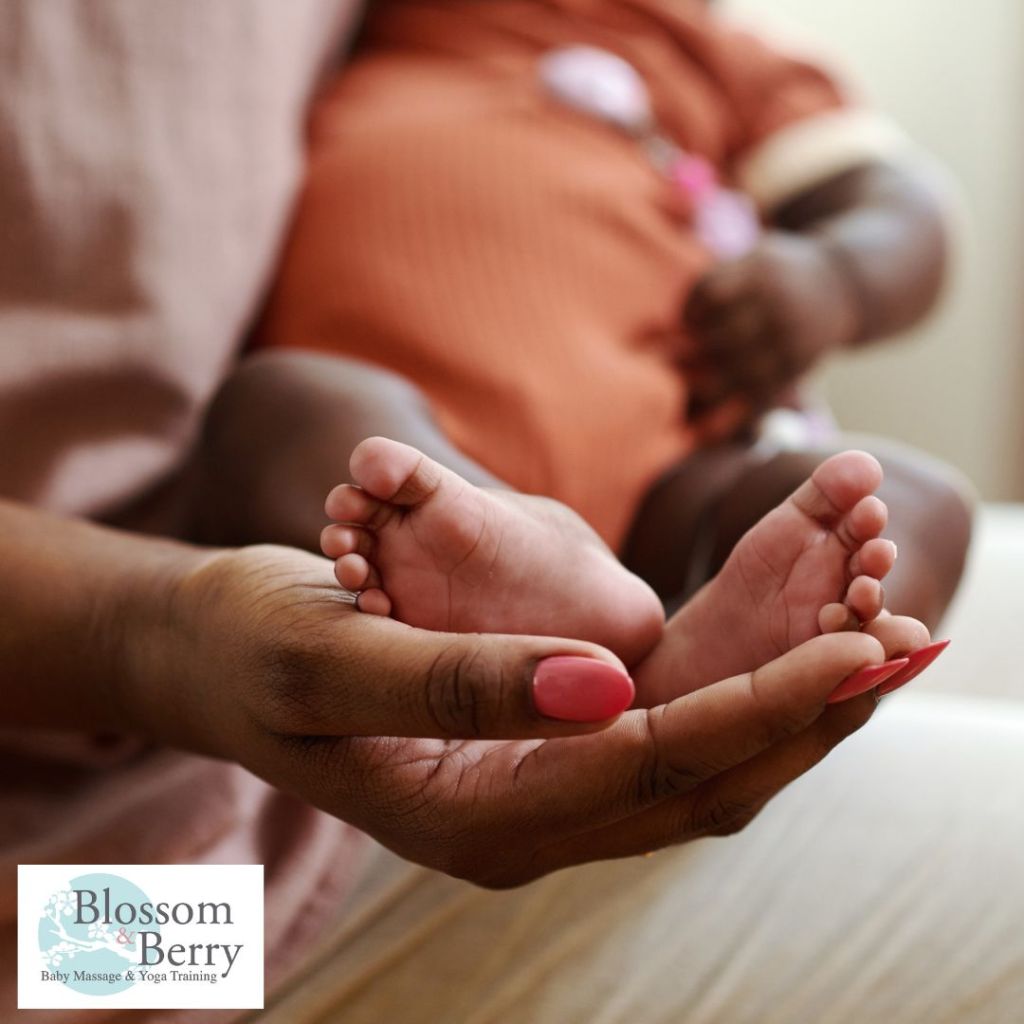
What this means in practice is profound and beautiful: every time you stroke your baby’s skin with love and intention, you are directly stimulating a neural pathway built specifically for social affection.The body is the entry point to the developing self. Touch is not a luxury — it is a biological necessity.
Skin-to-Skin: The Original Love Bubble Begins at Birth
Before we explore the practice of baby massage and yoga, we must begin at the very beginning — with the first act of intentional, nurturing touch: skin-to-skin contact.
Research published in the journal Acta Paediatrica documented the nine instinctive stages a newborn passes through when placed skin-to-skin on the mother’s chest in the first hour after birth: the birth cry, relaxation, awakening, activity, rest, crawling toward the breast, familiarisation, suckling, and sleep. These are not accidental movements — they are choreographed by millions of years of evolution, designed to regulate the newborn’s transition from womb to world. Skin-to-Skin Contact the First Hour After Birth, PMC
The hormonal cascade triggered by skin-to-skin contact is extraordinary:
- Oxytocin floods both mother and baby, contracting the uterus, reducing blood loss, and initiating the bonding circuitry in the maternal brain.
- Catecholamines in the newborn — present at 20 times the levels of a resting adult — help absorb lung fluid, sharpen alertness, and strengthen memory formation.
- Cortisol levels drop, reducing the physiological “stress of being born.”
- CCK (cholecystokinin) is released during suckling, creating a deeply relaxed, satiated, postprandial sleep in both mother and infant.
The long-term implications of this early contact are equally remarkable. Research shows that skin-to-skin contact positively influences mother-infant mutuality one year later, improves infant self-regulation at 12 months, and that improved self-control in early childhood — rooted in this early bonding — is associated with better educational outcomes, higher income, and reduced rates of addiction and criminal behaviour in adulthood. PMC Skin-to-Skin Research
This is the first chapter of the Love Bubble. It begins with breath, warmth, and the profound intelligence of the human body.
The Love Bubble: Creating a Sacred Space for Connection
The concept of the Love Bubble that we share at Blossom & Berry is not merely poetic. It is a deeply practical, scientifically-grounded framework for understanding what infants need most in these first 60 days.
Imagine the contrast from the baby’s perspective: they have left a perfectly bespoke, warm environment — continuously rocked, held, nourished, surrounded by the rhythmic heartbeat and voice of their mother — and arrived into an open, unpredictable, intensely sensory world. The Love Bubble is the somatic, relational, sensory container we consciously create to ease this transition and provide the conditions in which a baby can truly flourish.
The Love Bubble is built from six essential, interconnected elements:
Eye Contact — the synchronisation of minds and hearts
Skin Contact — the stimulation of the CT afferent system and oxytocin release
Scent — the mother’s unique olfactory signature, essential for recognition and safety
Voice — the earliest language, predating all words
Love Hormones — oxytocin, serotonin, endorphins, co-created through presence
Peaceful Environment — sensory calm, warmth, gentle light, soothing sound
In many traditional cultures, a “nesting period” of 40 days is protected and honoured after birth — a time for the mother and baby to rest, receive care, and bond without the interruption of modern life. Western culture has largely abandoned this wisdom, to the detriment of both infant development and maternal mental health.
The Love Bubble is a modern, accessible way to reclaim this sacred container — not as a luxury, but as a developmental necessity.
The Power of Touch: Baby Massage in the First 60 Days
Of all the practices within the Love Bubble, baby massage stands as one of the most comprehensively researched and profoundly effective tools available to caregivers.
A landmark review published in Neonatology Today categorised the benefits of infant massage into four pillars: Stimulation, Relaxation, Circulation, and Bonding.The Power of Touch: Benefits of Infant Massage for Infants and Their Caregivers, Neonatology Today
Stimulation & Growth
- Promotes increased weight gain, body length, and head, chest, arm, and leg circumference
- Enhances cognitive performance — improving orientation, alertness, and sustained attention
- Improves fine motor, gross motor, and social skill development
- Engages pre-language skills: eye contact, listening, cooing, facial imitation, and gesture
Relaxation & Nervous System Regulation
- Reduces cortisol, norepinephrine, and epinephrine — the stress hormone trio that, left chronically elevated, can impair neural development
- Triggers the release of melatonin, helping to establish the circadian system and improve sleep
- Reduces sleep onset latency, nighttime awakenings, and agitated behaviour during sleep
- Activates the parasympathetic nervous system, promoting the “rest and digest” state essential for healthy development
Circulation & Digestion
- Stimulates vagal tone — a measure of the parasympathetic nervous system’s health — which is directly associated with both physical growth and socio-emotional development Vagal Activity, Early Growth and Emotional Development, PMC
- Promotes gastric motility through vagal activation, releasing insulin and gastrin to support healthy digestion and nutrient absorption
- Helps relieve colic, trapped gas, constipation, and neonatal jaundice
Bonding & Attachment
A landmark study published in Infant Behavior and Development tested the direct impact of an infant massage intervention on attachment security and found significant improvements in secure attachment between mothers and infants. Effects of Infant Massage on Infant Attachment Security, ScienceDirect
Research measuring salivary oxytocin in mother-infant pairs before and after massage found significant increases in oxytocin levels in pairs characterised by normal bonding — confirming that the physical act of massage literally floods both bodies with the chemistry of love. Effect of Infant Massage on Salivary Oxytocin Level, PMC
This is the biochemistry of the Love Bubble in action.
Baby Yoga: Movement, Rhythm & the Dancing Brain
Where massage offers the gift of stillness and reception, baby yoga introduces the gift of movement, play, and co-regulated exploration. Together, they complete a holistic somatic practice that speaks to every dimension of infant development.
Baby yoga involves gentle, guided movements, stretches, rhythmic rocking, and postural play that develop:
- Motor skills, muscle strength, coordination, and body awareness — laying the physical foundation for all movement to come
- Sensory integration — the multi-sensory nature of baby yoga (touch, rhythm, visual connection, proprioceptive feedback) helps infants understand their own bodies in space
- Emotional regulation — gentle poses and soothing motions activate the parasympathetic nervous system, reducing cortisol and supporting mood regulation in both baby and caregiver
- Cognitive and emotional growth — the playful, responsive interaction of baby yoga stimulates curiosity, early learning, and emotional resilience
The baby yoga space — like the baby massage practice — is not simply a physical exercise session. It is a relational dialogue: a conversation conducted in the language of movement, breath, and attunement. The caregiver learns to read the baby’s cues; the baby learns they are safe to explore. This is the living foundation of what the Harvard Center on the Developing Child calls “Serve and Return” — the back-and-forth exchanges of responsive caregiving that are the primary architects of neural circuitry. Serve and Return, Harvard Center on the Developing Child
Breath: The First Bridge Between Inner and Outer Worlds
Breath is the most fundamental somatic rhythm available to us — and it is one that mother and baby share from the very first moment of life outside the womb.
Research published in Frontiers in Psychology proposes that respiration functions as a crucial core of early rhythmic coordination, linking the infant’s vocalisations and bodily movements into an integrated developmental system. Toward a Fuller Integration of Respiratory Rhythms, PMC
When a caregiver consciously breathes — slowly, deeply, with intention — during baby massage or yoga, they are doing far more than relaxing themselves. They are offering their regulated nervous system as a bridge for the infant’s still-developing regulatory systems. A child’s nervous system, in these first months, cannot self-regulate. It co-regulates — borrowing calm from the bodies of those who hold it.
This is the somatic truth at the heart of every baby massage and yoga practice: your breath is your baby’s breath. Your calm is their calm. Your regulation is their regulation. Conscious, slow breathing during practice is not a technique — it is a transmission. Love creates love
Rhythm, Sound & the Musical Brain
Perhaps no finding in recent infant neuroscience is more astonishing — or more practically important — than the discovery that newborns arrive already tuned to rhythm.
A landmark study published in PLOS Biology in 2026, led by Roberta Bianco of the Italian Institute of Technology, recruited 49 sleeping newborns and measured their brain responses to piano compositions by Bach. The EEG recordings revealed that newborn brains reacted with measurable surprise when rhythmic patterns changed unexpectedly — demonstrating that even at just 2–3 days of age, babies are forming predictive rhythmic models of their auditory world.Human Newborns Form Musical Predictions Based on Rhythmic Structure, PLOS Biology, Newsweek
Lead researcher Bianco stated: “Newborns come into the world already tuned in to rhythm… Even our tiniest 2-day-old listeners can anticipate rhythmic patterns, revealing that some key elements of musical perception are wired from birth.”
This has profound implications for baby massage and yoga practice. When we:
- Sing to our babies during massage
- Tap rhythms gently on their bodies during yoga
- Rock and sway with intentional rhythm
- Use melodic, singsong vocalisations (what linguists call “motherese”)
…we are not simply entertaining or soothing. We are feeding the musical brain’s earliest predictions, reinforcing the neural circuits that underpin language processing, emotional regulation, and cognitive timing.
Research from the University of Washington demonstrated that musical intervention enhances infants’ neural processing of temporal structure in both music and speech — suggesting that the rhythmic practices within baby massage and yoga are directly laying the groundwork for future language development. Zhao & Kuhl, PNAS, 2016
Eye Contact: Where Two Brains Become One
Of all the elements of the Love Bubble, perhaps the most powerful and most overlooked is also the simplest: looking into your baby’s eyes.
Research by Dr. Victoria Leong and colleagues at the Baby-LINC Lab, University of Cambridge, using simultaneous EEG measurement of both infants and adults, discovered something astonishing: when a caregiver and infant make mutual eye contact, their brainwaves synchronise. The two nervous systems begin to oscillate together, creating what researchers describe as a neurological basis for communication, learning, and mutual understanding. Eye Contact With Your Baby Helps Synchronise Your Brainwaves, University of Cambridge
Dr. Leong explains: “When the adult and infant are looking at each other, they are signalling their availability and intention to communicate with each other. We found that both adult and infant brains respond to a gaze signal by becoming more in sync with their partner. This mechanism could prepare parents and babies to communicate, by synchronising when to speak and when to listen, which would also make learning more effective.”
During baby massage and yoga, eye contact is not incidental — it is the relational thread that holds the entire practice together. It is through that gaze that the infant receives not just warmth, but an entire neurological transmission: You are seen. You are known. You are safe. You are loved.
This is the lived experience of the Love Bubble made visible.
For Mothers & Parents: The Love Bubble Supports You Too
The narrative of early infant care so often places the parent in the role of giver alone — depleted, selfless, endlessly pouring. But the extraordinary truth, confirmed by a growing body of research, is that the Love Bubble nourishes the caregiver as deeply as the child.
A 2024 study published in PMC measuring salivary cortisol in mothers who administered infant massage to their extremely preterm babies in the NICU found that a single 15–20 minute massage session produced a statistically significant 20.1% reduction in maternal cortisol levels — an immediate, measurable physiological reduction in stress. Infant Massage as a Stress Management Technique for Parents, PMC
For mothers navigating the immense terrain of new parenthood — including up to 1 in 5 who experience postnatal depression — the regular practice of baby massage has been shown to:
- Reduce depressive symptoms and parenting stress
- Improve sleep quality — both maternal and infant
- Increase self-esteem and sense of empowerment
- Build confidence in reading infant cues and responding effectively
- Promote positive adaptation to motherhood
- Generate social support — from partners, family members, and peer groups Neonatology Today, 2021
The act of sitting in stillness, breathing consciously, making eye contact, singing softly, and moving with your baby is a somatic self-care practice as much as it is infant care. In the Love Bubble, healer and healed are one.
The Epigenetic Legacy: Love That Writes Itself Into Biology
Here perhaps is the most humbling finding of all: the love and nurture offered in these first 60 days does not simply create memories — it creates biology.
The emerging field of epigenetics reveals that caregiving experiences in early infancy can alter gene expression — not by changing the DNA sequence itself, but by influencing which genes are switched on or off. Animal studies cited in neural stroking research have demonstrated that maternal tactile care produces epigenetic effects on brain morphology, influencing how the genome expresses itself across a lifetime. Neural Correlates of Gentle Skin Stroking, PMC
Similarly, research on the microbiome — the vast ecosystem of bacteria that colonises the infant during and after birth — shows that skin-to-skin contact, breastfeeding, and early physical intimacy support the development of a healthy microbiome, which is now implicated in immunity, metabolic health, cognitive function, and emotional regulation across the lifespan. Skin-to-Skin Contact After Birth, PMC
The Love Bubble, in other words, is not simply a beautiful experience. It is an act of biological creation.Every stroke, every song, every breath shared, every gaze exchanged — is literally writing itself into the architecture of a new human being.
Bringing It All Together: Your Daily Love Bubble Practice
The science is clear. The wisdom is ancient. And the practice is beautifully simple.
Here is how the elements of the Love Bubble weave together in a daily baby massage and yoga session:
| Element | Practice | Physiological Effect |
|---|---|---|
| 🤲 Touch & Massage | Slow, intentional strokes along limbs, back, abdomen | CT afferent activation, oxytocin release, cortisol reduction |
| 🧘 Yoga & Movement | Gentle stretches, rhythmic rocking, leg cycling | Motor development, sensory integration, vagal tone |
| 🌬️ Breath | Slow conscious exhales, humming, sighing | Parasympathetic activation, co-regulation, nervous system modelling |
| 🎵 Rhythm & Sound | Singing, tapping, lullabies, “motherese” | Auditory neural prediction, language development, emotional regulation |
| 👁️ Eye Contact | Sustained, warm, responsive gaze | Brainwave synchronisation, serve-and-return circuitry |
| 🕯️ Sacred Space | Warmth, soft light, minimal distraction | Nervous system safety, cortisol regulation, parasympathetic state |
You do not need to be perfect. You do not need equipment, training, or a plan. What you need is presence— and the willingness to show up, skin to skin, eye to eye, breath to breath, with the extraordinary human being who has chosen you as their guide into this world.
A Final Thought: You Are Enough
In a culture obsessed with doing more, buying more, and achieving more, the most radical act a parent can offer their newborn is also the most ancient: simply being present with love.
The first 60 days are a sacred window that will never come again. They are not a time to get through — they are a time to be inside, fully and tenderly. The Love Bubble is your invitation to inhabit that time with intention, with science behind you, with ancient wisdom beside you, and with your heart — open.
Your touch is medicine. Your voice is nourishment. Your breath is regulation. Your eyes are the first mirror in which your baby will recognise themselves as worthy of love.
That is the most profound developmental intervention in the world. And you were born to offer it.
Scientific References
-
Harvard Center on the Developing Child — Serve and Return: Back-and-Forth Exchanges. developingchild.harvard.edu
-
Tierney, A.L. & Nelson, C.A. (2009). Brain Development and the Role of Experience in the Early Years. Zero to Three, 30(2), 9–13. PMC3722610
-
Bianco, R. et al. (2026). Human newborns form musical predictions based on rhythmic but not melodic structure. PLOS Biology. doi.org/10.1371/journal.pbio.3003600
-
Leong, V. et al. (2017). Speaker gaze increases infant-adult connectivity. PNAS.University of Cambridge
-
Uvnäs-Moberg, K. et al. (2019). Skin-to-skin contact the first hour after birth, underlying implications and clinical practice. Acta Paediatrica. PMC6949952
-
Gursul, D. et al. (2020). Neural correlates of gentle skin stroking in early infancy. Developmental Cognitive Neuroscience. PMC6968958
-
Porges, S.W. & Lewis, G.F. (2008). Vagal activity, early growth and emotional development. Infant Behavior and Development. PMC2556849
-
Glover, V. et al. (2021). The Power of Touch: Benefits of Infant Massage for Infants and Their Caregivers. Neonatology Today. neonatologytoday.org
-
Lotfalipour, H. et al. (2021). Effect of Infant Massage on Salivary Oxytocin Level of Mothers and Infants. Pediatric Research. PMC8082987
-
Mendelson, M. et al. (2024). Infant Massage as a Stress Management Technique for Parents of Extremely Preterm Infants. Frontiers in Pediatrics. PMC10947750
-
Zhao, T.C. & Kuhl, P.K. (2016). Musical intervention enhances infants’ neural processing of temporal structure in music and speech. Proceedings of the National Academy of Sciences, 113(19), 5212–5217. PNAS
- Karp, H. — The Fourth Trimester Concept. Referenced in: Columbia University Medical Centre
-
Moore, E.R. et al. (2016). Early skin-to-skin contact for mothers and their healthy newborn infants. Cochrane Database of Systematic Reviews. WHO
-
Frontiers in Psychology — Toward a Fuller Integration of Respiratory Rhythms Into Research on Early Development. PMC12880585
This blog was written with deep respect for the science of infant development and the ancient wisdom of nurturing touch. It is intended as educational content and does not replace personalised medical or perinatal advice.